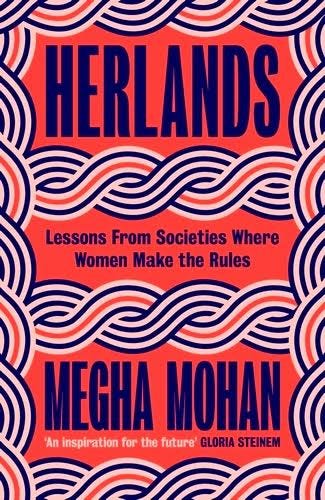
Worlds without men - discovering the secrets of women only societies
Author Megha Mohan on women-led communities like beguinages across the globe

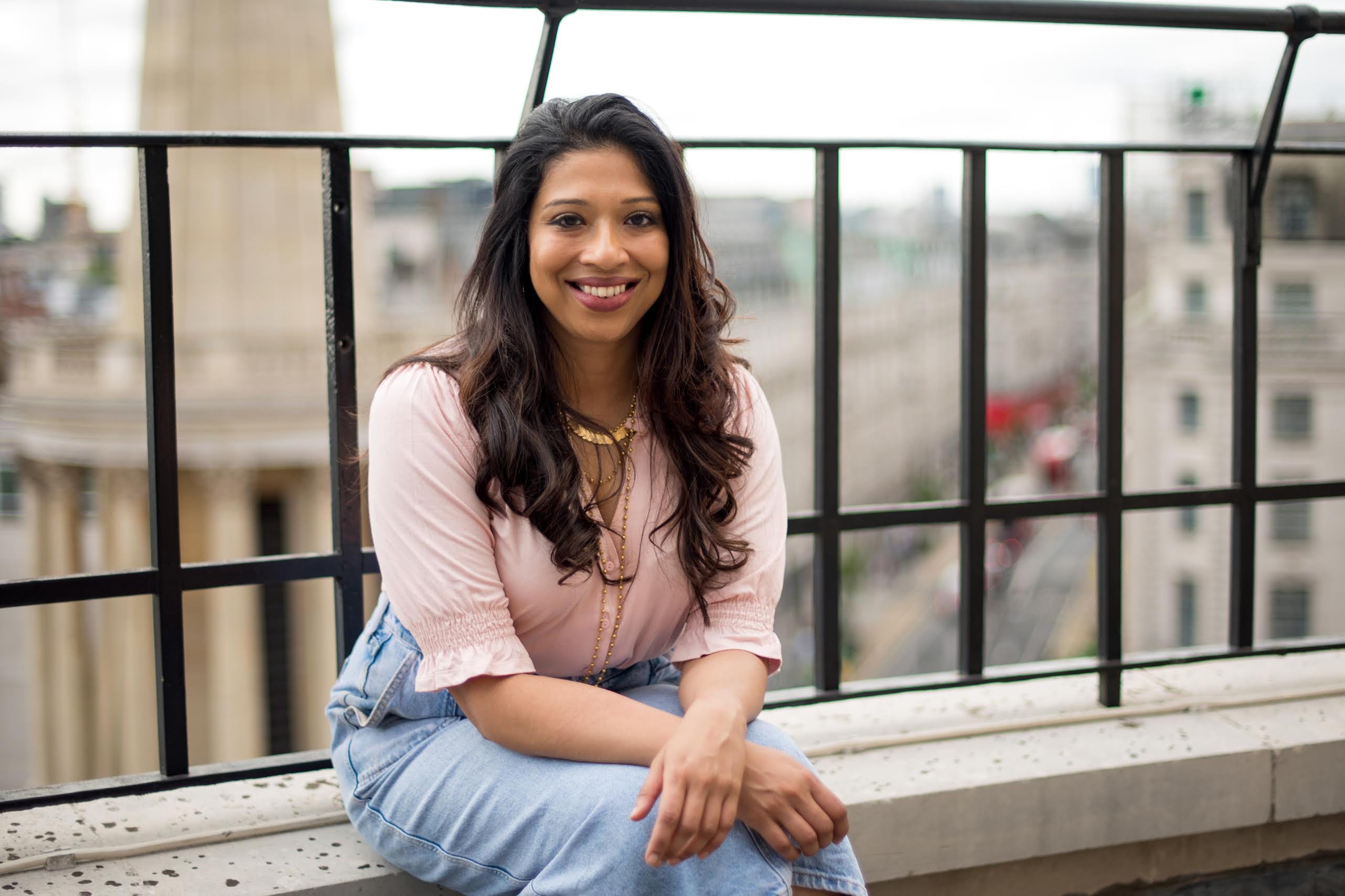
By Megha Mohan, author of Herlands: Lessons From Societies Where Women Make the Rules
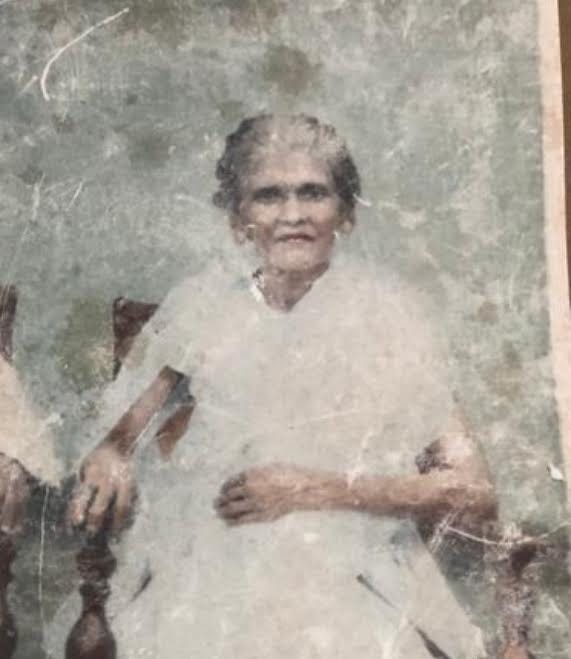
Over a hundred years ago, my great-grandmother lived in a women’s space – a community that centred women. She wasn’t a radical, nor was she living in an experimental, alternative commune. This was just how her centuries-old matrilineal society functioned; it had been shaped by and for women, and sustained across generations.
I only learned about my ancestral women-led living space in southern India through a chance conversation with a distant family member, and I found myself wondering why this part of my family’s history was spoken of so little. In trying to better understand my great-grandmother’s life, I also began a search for current-day women-led spaces and societies around the world.
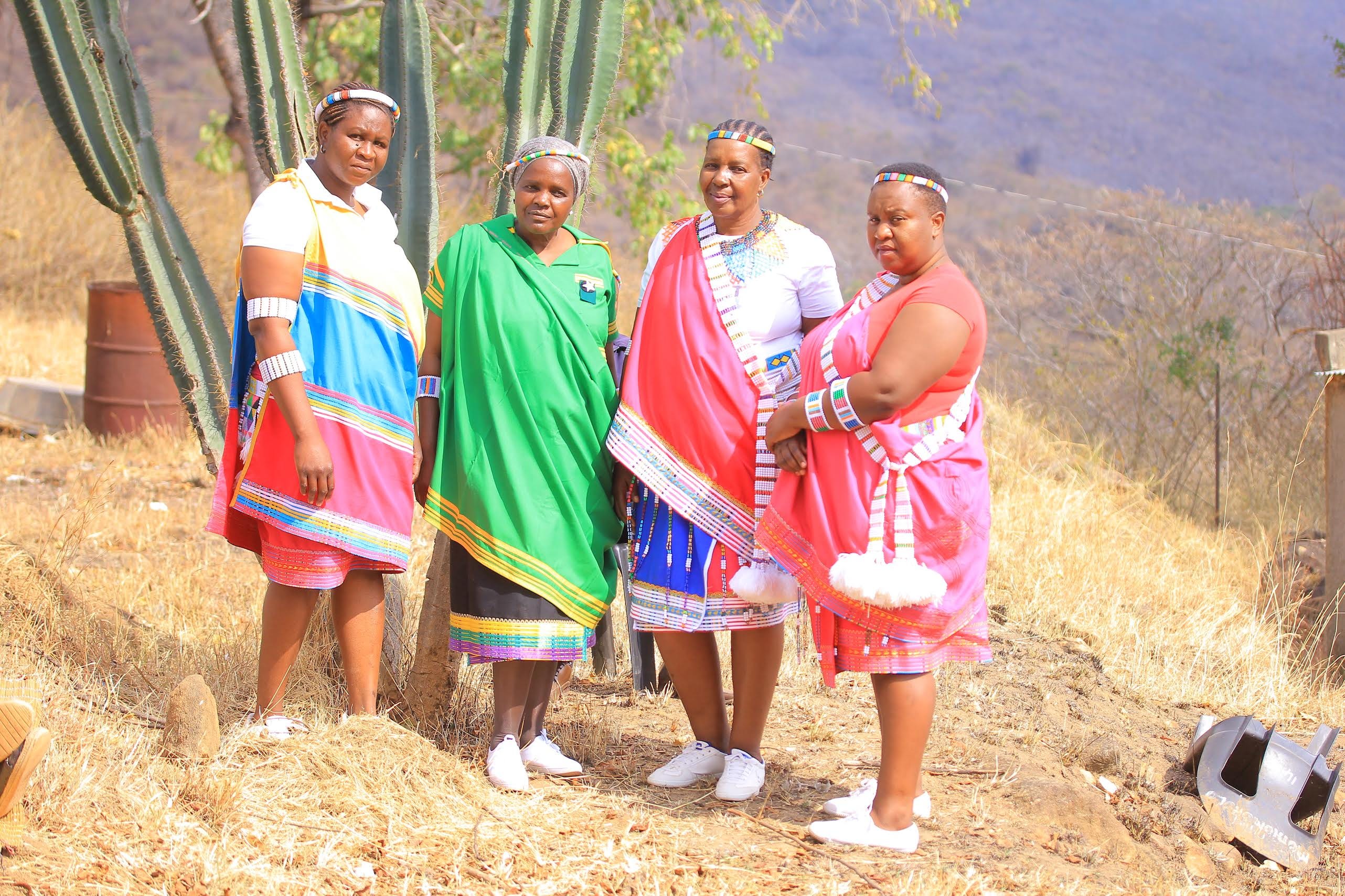
I began listening to the women who created and care for these communities, some of which have existed for several hundred years. I listened to the women who invited me into their private spaces and explained how they function and why they came to fruition.
What I found inside was powerful: across continents and civilisations, women-led communities have reshaped culture, reimagined economies, driven political change and fostered peace. They’ve provided refuge, resilience, and deeper connections to the land. However, they are by no means perfect societies. Not all of them offer women freedom or autonomy.
The more I explored, the more I became convinced that there was an urgent and layered story to be told about women-led spaces and societies. A story not just for women, but for anyone willing to learn from them.
A place for women
When you picture a women’s space, what comes to mind? Is it an imaginary place, like Themyscira, Wonder Woman’s island? Or historic, like a suffragette meeting? A gathering where men are still somewhere on the periphery, like a girls’ night out? A sports team?
I picture the world of Herland, a novel published in 1915 by the American writer Charlotte Perkins Gilman.
The story starts with three unlikeable American men who hear rumours of a women-only country high in the mountains, hidden within an unnamed continent. When the men reach the settlement hidden within a plateau, they find a 2,000-year-old advanced social structure, free from fear and violence.
The country in Herland is meticulously organised: clean, efficient and harmonious. Forests are cared for, food is abundant and waste is managed sustainably. Even the ‘jail’ is a cosy room. Each woman may become a mother only once, via an asexual process, to prevent overpopulation. Still, no woman is overburdened. Child-rearing is shared, spaces are designed for safety. There is no money, crime or worship of tradition.
There was a glaring omission that I was missing as a reader. Herlandian women were capable, athletic, strong and fearless. They were also all white. Herland may be a trailblazing imagining of what a country created by women could be, but it also offers an important accidental lesson. Advanced feminist ideals do not automatically include all women, and do not always align with anti-racist values. Like many who speak of equality, Gilman’s feminism was selective and exclusionary, and there is no ambiguity that she held racist and supremacist views.
Acknowledging this makes the experience of reading Herland complicated. Could a reader admire writing as visionary as Herland while being repulsed by the racist views of its creator, I asked myself.
Then I had a video call with my cousin Tushanka – an educator for girls in India and an avid reader. As I was explaining the plot of Herland, Tushanka interrupted me. “Sounds a lot like Sultana’s Dream,” she said, going on to describe a short story written by Bengali feminist Rokeya Sakhawat Hossain. Sultana’s Dream was published in 1905, a decade before Herland.
Sultana’s Dream imagines a women-led country called Ladyland (which is what Terry calls the unnamed women-led country in Herland). In Sultana’s Dream, women move freely and men are hidden away behind murdahs – a reversal of the gender-seclusion practice of purdah. Ladyland is peaceful, clean, and powered by solar energy – a fringe concept in the early 1900s.
The women of Sultana’s Dream and Herland are engineers, teachers, farmers and scientists who keep their societies functional and free of combat. They are confident and free from the timidness that comes from fearing a predator. The message is clear: when women are undistracted by war and division, they innovate.
Women’s only spaces
In our world, no country has been built with women’s security and comfort at the forefront. More than thirty countries have no laws addressing domestic abuse. Globally, a woman or girl is killed by someone in her own family every eleven minutes.
We are nowhere near the United Nations Sustainable Development Goal of achieving gender equality by 2030, and if we’re going at the current rate, it will take more than 135 years for women to be represented equally in positions of leadership in the workplace.
In a world that is so hostile to us, it’s unsurprising that women have created pockets for ourselves where we feel understood and safe. Places, both physical and online, where we can be vulnerable and feel the support of friendship and encouragement from other women.
I learned that a friend of a friend had grown up in an Irish Traveller women-only squat that banned entry to all men, including male cats. In almost every place I have visited, there has been at least one women-only corner. I’ve met lesbian women in Burundi who built a home where they gather to love and have sex, away from their husbands. I’ve stretched my legs in a fenced-off garden near a tea plantation in Malawi, where girls meet for a ‘radio club’ and plot how to avoid early arranged marriage and to stay in school. I’ve spoken with women who are trying to set up a ‘mommune’ in the US, where young and single mothers share accommodation to alleviate financial pressures.
These parallel worlds, quietly healing the failures of the mainstream, are everywhere – the shadow governments cementing the potholes of societies that have let them down.
Worlds without men
I was interested in women’s spaces long before I heard that they existed in my own ancestral home. The seed was planted when I was nineteen years old, in my second year of university and living as the only woman in a houseshare with five men, when I first read about much more desirable lodgings that had existed almost a thousand years earlier. I was transported to the 1200s, a time when Northern European women had two choices of submission: marriage or the convent. However, many pioneered a third way. They chose to live together in a beguinage.
A beguinage was a walled compound for financially independent women from all social backgrounds. These were the women who did not want a husband and did not want to be nuns – the ones who actively resisted the script of mother- hood, wifehood and state-controlled worship. By the 1300s, hundreds of beguinages existed across Northern Europe.
Related articles


The beguinage was a society that strictly excluded men, an almost thousand-year-old community that upended the expectations placed on women by our masculine societies. I felt bubbles of excitement, and so began my voyage to places where women thrive without men. It was the start of a curiosity that has lasted decades, and taken me around the world.
I stayed for hours at the Senate House and Maughan libraries in London, obsessively researching. I became fixated with the beguines, the women who lived in these communities. Their homes – the beguinages – ranged in size from fewer than a dozen women to several hundred. They sprang up in France, Belgium, Germany and the Netherlands. While they did have their lodgings donated to them by wealthy church- going families, they were not presided over or instructed by men from a church in the same way as nuns. The beguines were referred to by writers as the ‘sœurs grises’ (grey sisters), because of their humble grey tunics and head coverings.
Unlike nuns, though, these women had to earn a living. Their jobs were diverse, ranging from weaving to childcare and even brewing beer. In the evenings, they were free to return to their all-women haven – behind the high walls and a lockable gate – and they could leave this lifestyle any time they chose.
The beguinages were leaderless, with no founder and no formal way of life. They were urban single-sex phenomena, which produced writers like Mechthild of Magdeburg, Hadewijch, and Marguerite Porete – women who were accused of heresy and strongly criticised by wider society’s patriarchal leaders.
I convinced my friend Rachael that we needed to catch a train from London to Bruges in Belgium and see a beguinage in person. I was sure that we were going to visit an ancient but advanced women-only civilisation – some kind of Pompeii of matrilineal preservation.
When Rachael and I entered the beguinage, we were both disappointed. We’d loved walking from the historic centre of Bruges, over the arched Wijngaard Bridge and through the gatehouse and into the beguinage, which had existed since 1245. It was beautiful, but not revolutionary. I didn’t feel we had entered an alternative matriarchal dimension, a sci-fi alterworld, a Disneyland of historic feminism. Instead we found cobbled streets under pale steep-gabled A-frame houses around a central courtyard of lime and poplar trees. The collection of houses had separate sleeping quarters but communal indoor gathering, shared gardens and a church.
It was pretty and peaceful and dull. We couldn’t visualise the sœurs grises who once lived in self-sufficient simplicity – as single women who had chosen a life away from marriage – in this women-only compound.
“Would you have lived here in the 1200s?” teenage-me asked teenage-Rachael as we sat on a bench to eat ice cream. “Definitely not,” I recall teenage-Rachael replying. “I went to an all-girls school. I absolutely would not spend the rest of my life in a beguinage.”
We left to find a bar.
We didn’t speak about it again that day. But I began thinking about women’s spaces more and more. Over the years, after dozens of women I knew sought shelter and strength in women-only communities – and after needing them myself – the topic was pushed to the front of my mind.
I mentally ran through all the gender-separate spaces I had visited as a tourist in my personal and professional life – from sleepovers to sports clubs and religious ceremonies to safe- houses. I questioned what point they had served, and still did serve, in my life as a woman.
I started asking women around me about places they went to without men.
Stories started emerging from the shadows.
Herlands is available to buy now.