
The real story behind London's 'Ladies Bridge'
The wartime workforce shift that changed everything for women

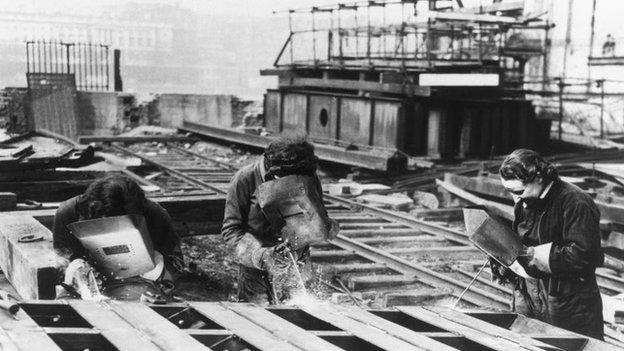
If you’ve ever taken a river boat along the Thames and passed under Waterloo Bridge, you might have heard it called the Ladies Bridge. And if you haven’t, consider this your heads-up.
The nickname has been floating around for years, passed on by river boat tour guides. For a long time, it sounded like one of those stories that’s nice if it’s true. It turns out, it is.
By the 1930s, a century after it officially opened, Waterloo Bridge was falling apart. A rebuild was already in motion when construction began in 1939 - right as the Second World War broke out. As men were sent to fight, Britain was left with a labour shortage that reached into every industry, including construction, and women stepped in.
Women’s contribution to the war effort is often told through familiar images - factory lines, uniforms, the “we can do it” poster in the US. (Although, fun fact: “We Can Do It!” wasn’t widely seen during World War II. It was actually an internal Westinghouse image, shown only in February 1943 to encourage existing female employees to work harder - not to recruit women. It was only rediscovered in the early 1980s and later became widely reproduced)
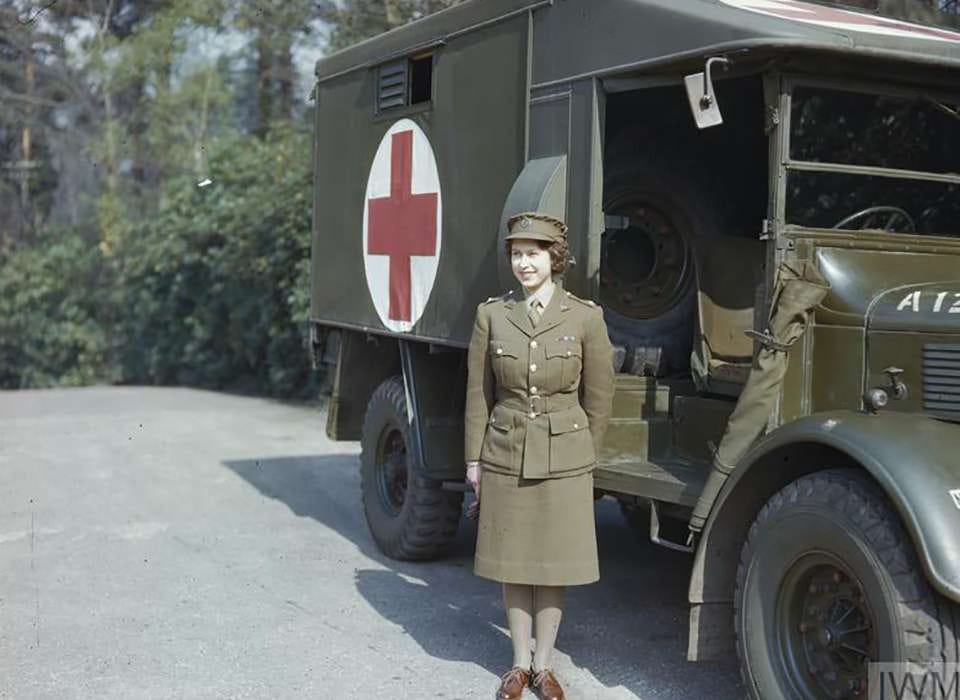
Even Queen Elizabeth II trained as a mechanic and driver with the Auxiliary Territorial Service. But what tends to get less attention is the scale of women’s work in places like building sites.
By 1944, around 25,000 women were working in construction across the UK. On Waterloo Bridge, it’s now believed that up to 65% of the workforce were women. They were doing skilled, physical, technical labour - lifting, welding, assembling - the kind of work they’d long been excluded from.
And yet, when the bridge reopened in 1945, there was no mention of them.
A mix of wartime censorship and incomplete records meant their contribution was barely documented. Without official recognition, the story started to slip. Over time, it became something closer to myth - kept alive more by word of mouth than by anything written down.
It stayed that way until the early 2000s, when historian Christine Wall began looking into it. Alongside filmmakers Karen Livesey and Jo Wiser, she went digging through archives. At the National Science and Media Museum, they found photographs that had been overlooked for decades - including images of women dismantling the original bridge, and a welder known only as Dorothy working in the final years of construction.
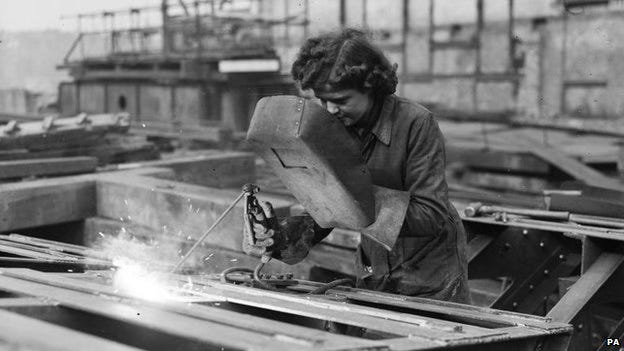
They also tracked down testimonies from families of workers, confirming what the nickname had hinted at all along: women made up a significant part of the workforce.
In 2015, the bridge was re-listed, this time acknowledging their role.
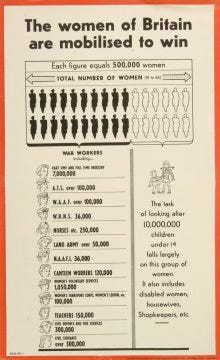
The wider context makes that story feel less surprising. During the war, women’s employment rose sharply - from around 5.1 million in 1939 to over 7.25 million by 1943. Nearly half of all women of working age were employed or in national service. Among single women aged 18 to 40, it was closer to 90%.
They became mechanics, engineers, munitions workers, air raid wardens, bus drivers and fire engine drivers. More than 640,000 served in the armed forces through organisations like the ATS, WRNS and WAAF. Elsewhere, over 80,000 joined the Women’s Land Army, working long hours in tough conditions to keep the country fed.
Because women were moving into skilled roles that had previously been closed to them, it forced conversations about equal pay and status. Some limited agreements on equal pay were introduced, but they were narrow and often avoided. On average, women still earned just over half of what men did.
At the same time, Britain had to respond to a new reality. With more women working, childcare became a national issue. Wartime nurseries expanded rapidly, though they were always seen as temporary. The expectation that women would return to domestic life never fully went away.
And after the war, many did - not always by choice. As men returned, women were pushed out of jobs in large numbers. Despite wanting to stay in employment, most lost the economic independence they had gained.
The Ladies Bridge is more than infrastructure - it’s a record of a moment when the workforce shifted dramatically. There’s still an ongoing campaign, supported by the Women’s Engineering Society, to install a blue plaque on the bridge to honour the women who built it.
When you zoom out, the gap between contribution and recognition is hard to ignore. Across both the UK and the US, there are still fewer than ten women-only memorials dedicated to the Second World War. In Britain, the most prominent is the Monument to the Women of World War II on Whitehall, unveiled in 2005 - the same year Waterloo Bridge’s story was formally acknowledged.
