
“You know a rapist - everybody does”
Jess Phillips MP talks to The Female Lead about the new Violence against Women and Girls strategy


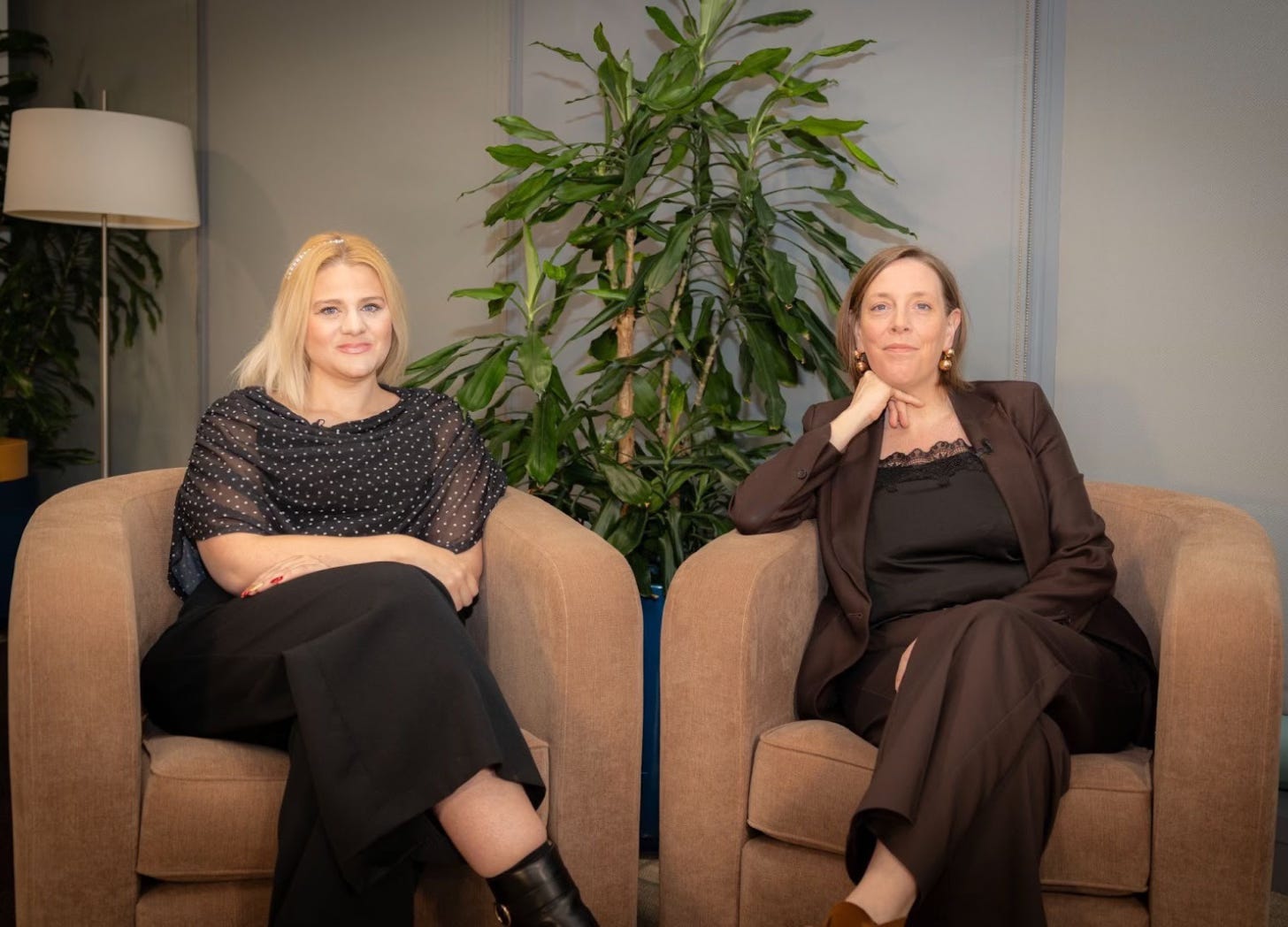
By Caroline Millington, Editorial Director
When Jess Phillips MP, Minister for Safeguarding and Violence against Women and Girls, invited us to the Home Office to discuss the UK government’s new Violence against Women and Girls (VAWG) strategy, we knew it was going to be a tough conversation.
A 2024 report from police chiefs stated that violence against women is a national emergency in England and Wales with around two million women a year estimated to be victims of male violence. The report revealed that this figure was an underestimate as most offences are not reported.
The government’s new strategy is long overdue. Built around three goals – preventing radicalisation of young men with focus on early intervention, education and addressing harmful attitudes before they take root; stopping abusers; and supporting victims – it’s ambitious. But does it go far enough?
We welcome the new Violence against Women and Girl strategy but why did it take so long?
That is completely legitimate criticism and I fully take responsibility for it. The deadlines were self imposed. I didn’t think it was ambitious enough. I could have hit the deadline and missed the point, and I thought the point was more important. It’s entirely on me. I take full responsibility and government ministers don’t often do this.
One policy is for all police forces to have dedicated rape and sexual offence investigations teams by 2029. With 200 women reporting rapes every day in the UK, that’s thousands that won’t get the support they deserve…
Look, rape victims should still access our justice system. Having a specialist team will be a massive improvement in the system. That doesn’t mean in the meantime nothing will happen in that police force. I don’t want to make out like that is the case. Putting specialist violence against women and girls teams in every single police force is really a way of the government saying ‘This is a priority.’ Twenty per cent of all crime that comes into any police force in the country is violence against women and girls.
The level of volume and inevitability of it has led institutions, whether it’s the police, courts, health services, into a point of acceptance of one of those things. This is a priority and absolutely core to policing.
We all know someone who has been a victim of male violence. Over a dozen of my friends have unfortunately been raped and only one woman I know reported it. What is being done so more women will come forward now?
Two things. The strategy has to encourage more people to come forward. So while the government has set a target of halving violence against women and girls [in the next decade], I would be a fool and juking the stats for the sake of looking good if I didn’t want to see a massive rise before seeing a massive fall for that exact reason.
Actually, women will come forward - the reason that your friends, like my friends, like me. I have suffered all sorts of violence in my lifetime, I’ve never once reported any of it. That’s not true actually, as a politician, I have to report it all the time.
Women will start to come forward when they believe the institutions they come forward to will believe them, support them and act accordingly. If there was a silver bullet I could put on it, I would do it. Fundamentally, the police system has to improve, the court system has to improve.

The thing I’m proudest of in the strategy, and it’s a hail mary cos it’s never been done before on this point, is that I’d like those women not to have been raped in the first place.
You can’t know 12 women who have been raped and not know a rapist. You know a rapist, everybody does. Everybody knows, and loves, somebody who perpetrates this. And what I would say is I don’t want that life for my sons either. We can’t arrest our way out of a growing concern about young men’s attitudes, access to pornography, and we haven’t included them in the conversation. And so the thing we are having to invent, because it doesn’t exist, is ‘What are we going to do growing sexually harmful behaviours amongst young men?’ And the answer in the strategy is, we’re going to invent interventions for these groups of people to try and stop them becoming rapists in the first place.
The issue isn’t we all know 12 people who have been raped. The issue is we all know rapists.
Halving violence against women and girls in the next decade is ambitious. But does that mean the government believes 1 in 4 women experiencing male violence is acceptable?
Of course I want to eliminate violence against women and girls, but when we wrote the manifesto commitment that we would halve violence against women and girls, if you don’t put a tangible number on it… if you just state we want to eliminate violence against women and girls and that’s the level of analysis. That’s like saying war is bad. Of course, everyone wants that. If you put a number on it that can be measured. I want to eliminate violence against women and girls. We count what we care about.
The Female Lead audience believes the narrative around violence against women and girls should be focused on the perpetrators rather than the victims. Do you agree?
I absolutely agree. There’s an international conversation that’s been happening for the past 10 years around big pitch points, the Me Too movement or [the murder of] Sarah Everard - we need to really shift around the idea. This is not a women’s problem, this is a men’s problem. But we have to do this, I can feel the tension in myself, we will not succeed if men feel under attack. As much as I’d like to be, ‘Well it’s their bloody responsibility’, the outcome is all that matters. And actually inviting men into these conversations, actually they probably don’t think of it in those terms. Men think it’s awful because [it’s] everyone’s mother, daughter or sister. You hear a lot of, ‘I’m the father of daughters’ conversations. But actually, [for men] ‘Your friends are people who do this’ is the more important conversation and where they can intervene. I don’t think women can change the narrative unilaterally. We already saw what’s been the backlash to Me Too - Andrew Tate.
How are you going to change the narrative?
I’m going to take away the focus from the victim and say, ‘Why does she have to leave her house? Why doesn’t he have to leave their house? Why does she have to go to the police force? Why aren’t the police just watching him rather than responding to her?’ It’s not her, she’s not the problem - the focus is on the perpetrators and boys. And that will cause some consternation because that’s quite a big change. And lots of people in the women’s sector don’t feel confident in that. But the definition of madness is doing the same thing and expecting a different result.
What’s your message to The Female Lead audience?
The Female Lead already seems to be doing a pretty good job. [To The Female Lead readers] I need you. Governments pass legislation, it’s been illegal to rape for quite a long time, look how well that’s gone. This is going to take everybody doing their bit to change culture. I’m loathed to ask women to do more if I’m honest, because quite frankly you must be knackered. I feel it myself. But what I would say is, we’ve got your back. It’s going to take time but we need everyone to be involved.
Many of us know them up close and personal.
I've heard that many local prosecutors refuse to prosecute sexual assault cases. What can be done about that?