
“Working as a death doula taught me how to live”
End of life doula Emma Clare talks to The Female Lead about the biggest regrets dying people have - and what it teaches us about life.

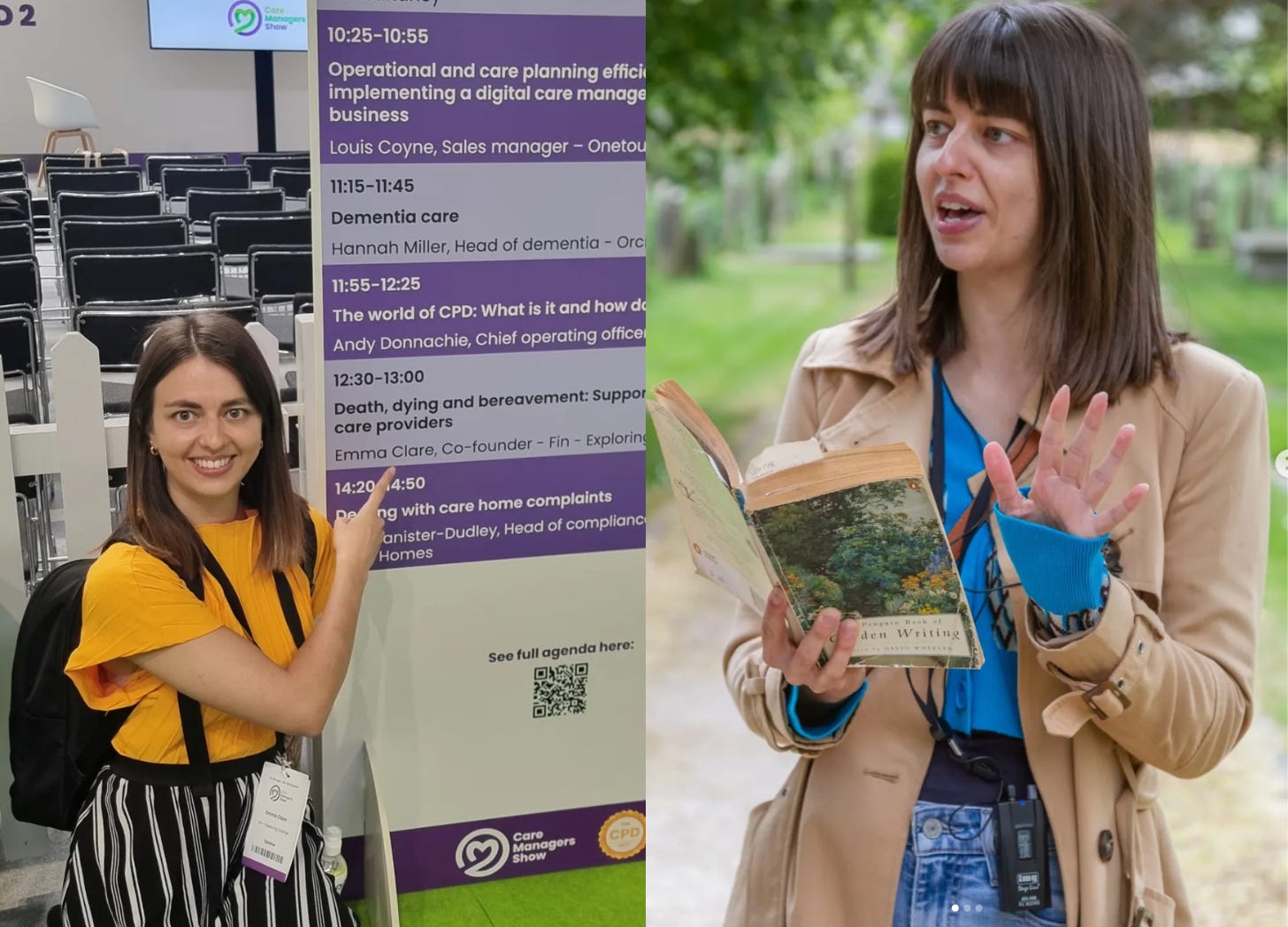
By Dr Emma Clare
People often assume my work is all about death. It isn’t. It’s about living as fully as possible until the very end.
I’m the CEO of End of Life Doula UK, and I support people who are dying, alongside the people important to them. The role of an end of life doula - also referred to as a death doula - is non-medical. We sit somewhere between professional services and the community, helping people navigate practical decisions around their care while providing emotional, social and spiritual support. We advocate for what matters most to someone, helping them have the death – and more importantly, the life – that feels true to them.
I never planned to become an end of life doula. I studied psychology at university and took a job in domiciliary care while I was training. Nobody mentioned that many of the people I’d be visiting would be in the last weeks of their lives. I thought it would be heartbreaking. Instead, I found myself drawn to those moments.
Growing up helped prepare me in ways I didn’t appreciate at the time. I was raised by my mum and my grandparents, and death was never treated as something frightening or taboo. We spent the majority of our free time exploring the Peak District, fascinated by nature. If my grandad found a dead bird on his bike rides, we’d examine it with curiosity rather than fear. Death wasn’t hidden away, it was simply part of life.
When my grandmother died suddenly while I was 21, I experienced my first significant bereavement. Sitting with my family in A&E, I found myself instinctively helping everyone make space to say what they needed to say to her before she died. I stayed with my grandad while he spoke to his beloved wife one last time. Even in a hospital side room, there was room for tenderness, dignity and love. Looking back, that experience shaped everything that followed.
Later, I discovered end of life doula training almost by accident. I signed up thinking it would simply be useful professional development. Before I’d even finished the course, someone I knew contacted me because their father was dying. I felt completely out of my depth, but I quickly realised something important: people weren’t looking for an expert with all the answers. They were looking for someone willing to have conversations that everyone else was avoiding and explain what their dad was going through was the normal dying process, gently but clearly.
That remains one of the biggest misconceptions about my work. Families are often overwhelmed not because death itself is terrifying, but because nobody has explained what’s happening. Sometimes all they need is someone to calmly translate medical language into something human. I also get to know the person dying, the life they’ve lived, and what matters most to them. My job is to advocate for them and help relatives if people aren’t on the same page.
One of the most distressing experiences for families is watching someone who is actively dying when they don’t understand what they are seeing and hearing. Changes in breathing, fluctuating consciousness and the so-called “death rattle” can seem frightening if you’ve never witnessed them before. Often, the person who is dying is peaceful, while it’s the people around them who are suffering most. Much of my role is helping families understand what they’re seeing is our body’s way of preparing to die so they can stop fearing every moment and instead spend meaningful time together.
Related Articles


I wish we talked about death much earlier. We all know we are going to die, yet many of us wait until we’re standing in a hospital corridor during a crisis before having conversations that could have happened years earlier.
People often ask whether schools should teach children about death. I think they should. Children are actually remarkably good at talking about death until adults teach them that it’s something uncomfortable or inappropriate. We would all benefit from becoming more comfortable with grief, loss and mortality long before we desperately need that knowledge.
Working in this field has also transformed my own mental health. That surprises people. They assume thinking about death every day must be depressing. For me, it’s been the opposite.
Every day I ask myself a simple question: if my life ended sooner than I expected, would I be happy with how I’m spending my time?
That perspective has made me less anxious, more grateful and much more intentional. I don’t sweat the small stuff in the way I once did. I notice birdsong. I appreciate ordinary days. Death has made my life bigger, not smaller.
One woman I supported put it perfectly. After receiving a terminal diagnosis, she said to me, “Since I’ve been diagnosed, my life is more colourful.”
I hear versions of that again and again. Faced with mortality, people suddenly start seeing the world differently. They notice the trees, the changing seasons and the people they love. I don’t think we should have to wait for a terminal diagnosis before we start living that way.
People often ask what dying people regret most. The popular lists online don’t always match what I’ve heard. One of the most common regrets people have shared with me is staying too long in relationships that no longer brought them joy. Many women describe sacrificing themselves to keep everyone else happy, only to realise, at the end of their lives, how much of themselves they gave away.
That says something much bigger about the expectations placed on women. Care is still seen as women’s work. The adult child who contacts our charity because they’re exhausted caring for a parent is, more often than not, a daughter. Women carry enormous emotional labour, often alongside work and family responsibilities, and society still undervalues that care.
That’s something I’m passionate about changing. Care work matters. Compassionate communities matter. The people supporting us through the biggest moments of our lives deserve to be valued.
My own leadership journey has challenged assumptions too. At 35, I’m now CEO of End of Life Doula UK, something I still occasionally find surreal. Early on, I thought leadership meant becoming harder, more detached and more authoritative. Then I found myself crying during a difficult meeting with someone who’d had a bad experience. I was mortified. I thought I’d completely failed as a leader.
Instead, that moment built trust.
It taught me that empathy isn’t a weakness. Sometimes our humanity is exactly what leadership requires.
I’m also autistic and have ADHD. There are countless misconceptions about what that means, including the myth that autistic people lack empathy. My experience couldn’t be more different. I’m deeply empathetic, and the way my brain works helps me juggle complexity, spot patterns and lead an organisation that has grown rapidly over the last few years.
We receive around 30 requests for end of life doula support per month, and this has risen sharply since Nicole Kidman announced in April that she is training to become an end of life doula, joining a number of other high-profile figures including Hamnet director Chloe Zhao, Riley Keough, and Ruby Wax.
If there’s one thing I wish everyone knew about death, it’s this: don’t wait for the perfect moment to talk to your loved one about the impact they’ve had on your life and what memories you’ll treasure in the future.
One thing that has surprised me most is how ordinary death can be. It’s always portrayed as dramatic on TV and in films, and I don’t want to ‘positive-wash’ death, but it can be very simple, peaceful and beautiful. And often families sit with their person for days, pop out for 15 minutes and that’s when they take their last breath. It is common for people to wait until they’re alone to die, and it’s nothing for relatives to feel guilty about.
Television has taught us to expect profound final speeches and neatly scripted goodbyes. Real life is rarely like that. Say the things you want to say now. Tell people you love them while they can hear it. Have the conversations you’ve been avoiding.
The reality is that working with death has made me more hopeful, not less. It has shown me that life isn’t measured by how long it lasts, but by how present we are while we’re living it.
For more information about end of life doulas and to seek support visit ⤵️

Thank you, Emma, for teaching us something so meaningful and so possible. Denise