
Why burnout is so difficult to recognise in capable women
Author and somatic movement educator Nahid de Belgeonne on the hidden cost of being the woman who holds everything together

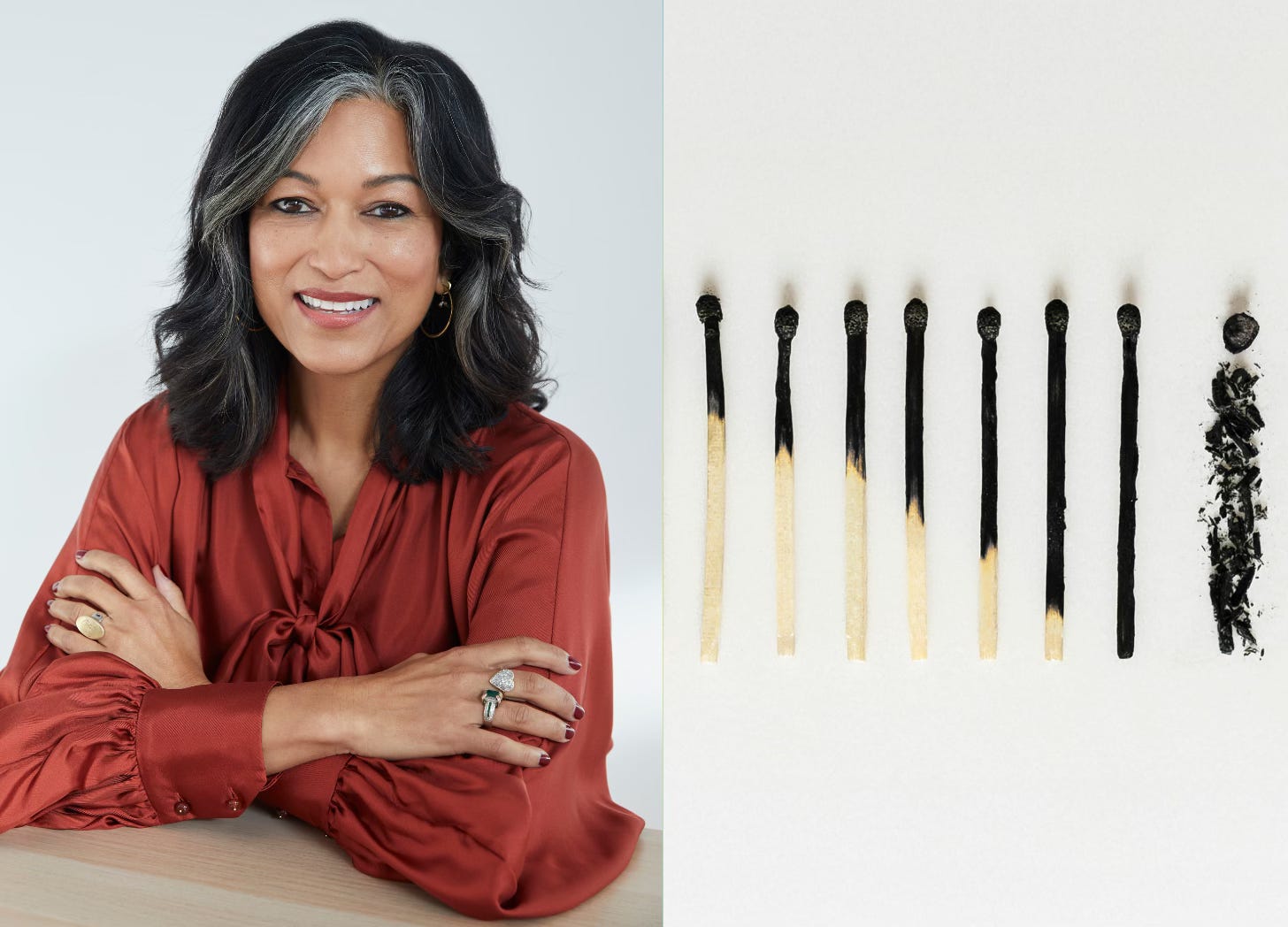
By Nahid de Belgeonne
A client said something to me recently that I haven’t stopped thinking about.
“I realised I had survived my success more than I had enjoyed my life.”
From the outside, her life looked exactly as she’d hoped it would.
A successful career, a family she loved and a home she had worked hard to build.
She was capable, competent and dependable. The person everyone turned to when something needed organising, solving or remembering.
Yet underneath it all, she was exhausted.
Not because she wasn’t resilient. Not because she couldn’t cope. Quite the opposite.
She had become exceptionally good at coping.
And that’s often where the problem begins.
Because many high-functioning women don’t recognise their own exhaustion until their body forces them to.
For years they continue functioning.
Meeting deadlines. Managing households. Supporting partners. Remembering birthdays.
Scheduling appointments. Holding emotional space for colleagues, children, friends and family members.
The list is endless.
What often goes unnoticed is the invisible labour underneath it all.
The thinking, anticipating, remembering, monitoring…the emotional management of it all.
Sociologists have long referred to this as emotional labour, but I think that phrase only captures part of the picture.
What many women carry is not simply emotional labour.
It’s a constant state of responsibility.
An ongoing awareness of what needs doing, who needs support and what might go wrong if they stop paying attention.
And over time, the body adapts.
This is something I see repeatedly in my work.
Women often arrive believing they have a stress problem or an anxiety problem.
What they actually have is a body that has become organised around responsibility.
Years of being the organiser. The reliable one. The person with the answers.
Years of anticipating needs before they’re spoken.
Years of staying one step ahead.
Your body learns from repetition.
It learns that vigilance is useful.
It learns that staying prepared is necessary.
It learns that slowing down might mean something gets missed.
Eventually these adaptations become so familiar they feel like personality.
“I’m just a worrier.”
“I’ve always been like this.”
“I like to stay busy.”
But often the body has simply adapted to the life it’s been living.
This is one reason burnout can be so difficult to recognise in capable women.
We tend to imagine burnout as collapse.
Someone unable to continue.
Someone visibly overwhelmed.
In reality, burnout often hides inside competence.
The woman who answers every email.
The woman who never forgets anything.
The woman who keeps everyone else’s lives running smoothly.
The woman who appears calm while carrying a relentless internal mental load.
From the outside she looks successful.
Inside, her body may be paying a very different price.
The shoulders that never quite relax.
The jaw that’s permanently tight.
The interrupted sleep.
The inability to switch off.
The exhaustion that rest doesn’t fully touch.
What fascinates me is how often these women continue pushing forward because they assume their ability to function means they’re fine.
But functioning is not the same thing as wellbeing.
Nor is it the same thing as living fully.
Related articles


Many women have become so skilled at carrying responsibility that they no longer notice its weight.
Until the body notices for them.
The irony is that many of the qualities society rewards in women are the very qualities that can become costly when left unchecked.
Adaptability.
Reliability.
Responsiveness.
Competence.
Care.
These are strengths.
But strengths carried continuously without recovery eventually become burdens.
I don’t believe the answer is for women to become less ambitious, less caring or less capable.
The answer lies in recognising that capability should not require chronic self-abandonment.
That being dependable should not mean being perpetually available.
That success should not come at the expense of inhabiting your own life.
Because perhaps the greatest cost of holding everything together isn’t exhaustion.
It’s what exhaustion quietly steals.
Presence.
Pleasure.
Creativity.
Joy.
The ability to fully arrive in the life you’ve worked so hard to create.
And that, to me, is the conversation more women need to be having.
Not how to become more resilient.
But how to stop carrying so much alone.
Three Ways To Start Reclaiming Your Capacity
1. Notice what you’ve normalised
One of the most powerful questions I ask clients is:
“What have you started calling normal?”
A clenched jaw.
Interrupted sleep.
Never sitting down without reaching for your phone.
Feeling responsible for everyone else’s experience.
Many of the patterns that drain us are hiding in plain sight because they’ve become familiar.
Awareness is where change begins.
2. Build recovery into your day, not just your holidays
Many women live as though recovery is something they’ll earn later.
After the project.
After the deadline.
After the children are older.
After the next busy season.
But the body doesn’t work like that.
Recovery isn’t a reward.
It’s a biological requirement.
Five minutes of conscious breathing.
A short walk without your phone.
A pause between meetings.
Small moments of recovery repeated consistently are far more powerful than waiting for the perfect weekend away.
3. Stop treating every thought as a task
Many capable women live in a state of continuous mental preparation.
The moment a thought appears, they act on it.
Respond.
Plan.
Organise.
Research.
Fix.
Try experimenting with a simple question:
“Does this need my attention right now?”
Not everything requires an immediate response.
Sometimes the most supportive thing we can do for ourselves is allow a thought to exist without turning it into an obligation.

About Nahid de Belgeonne
Nahid de Belgeonne is a somatic movement educator, nervous system specialist and author of Soothe: The Book Your Nervous System Has Been Longing For. She helps women understand the patterns their bodies have learned so they can create more rhythm, recovery and presence in everyday life.
Follow on Substack: Soothe with Nahid de Belgeonne | Substack
Free masterclass: Why Your Body Can’t Switch off Even When Nothing Is Wrong
Learn more: www.thehumanmethod.co.uk

High functioning women are too good at masking-just like everything else they set their mind to.
Thank you for writing about this. Many capable women also experience coercive control. You might not know they have this going on, because they manage it and everything looks fine from the outside. You wouldn't suspect it because they don't portray the image of a victim. They might not seek help because they identify themselves as a capable person.