
What you feed your brain matters 🧠
‘Rage bait’ was named the word of the year for 2025 - it’s no wonder young people feel overwhelmed online.

Teens are spending less time scrolling on social media than previous years, but the consumption of memes, news and entertainment is more intense, emotionally charged and curated by platform algorithms than ever. In the UK, teenagers currently consume an average of three hours of social media per day, with almost half of 16-24 year olds saying it has a negative impact on their mental health [Ofcom, 2024].
This isn’t happening by accident. ‘Rage Bait’ was named Oxford Dictionary’s Word of the Year 2025, highlighting just how much online content is engineered to provoke, polarise, and keep us glued to our screens.
And when young people are forming their sense of self, this drip feed of comparison, perfectionism and controversy has consequences.
So, what’s the good news?
Just like you choose what to feed your body, you can choose what to feed your brain. And we can encourage young people to follow creators who promote positivity, not controversy.
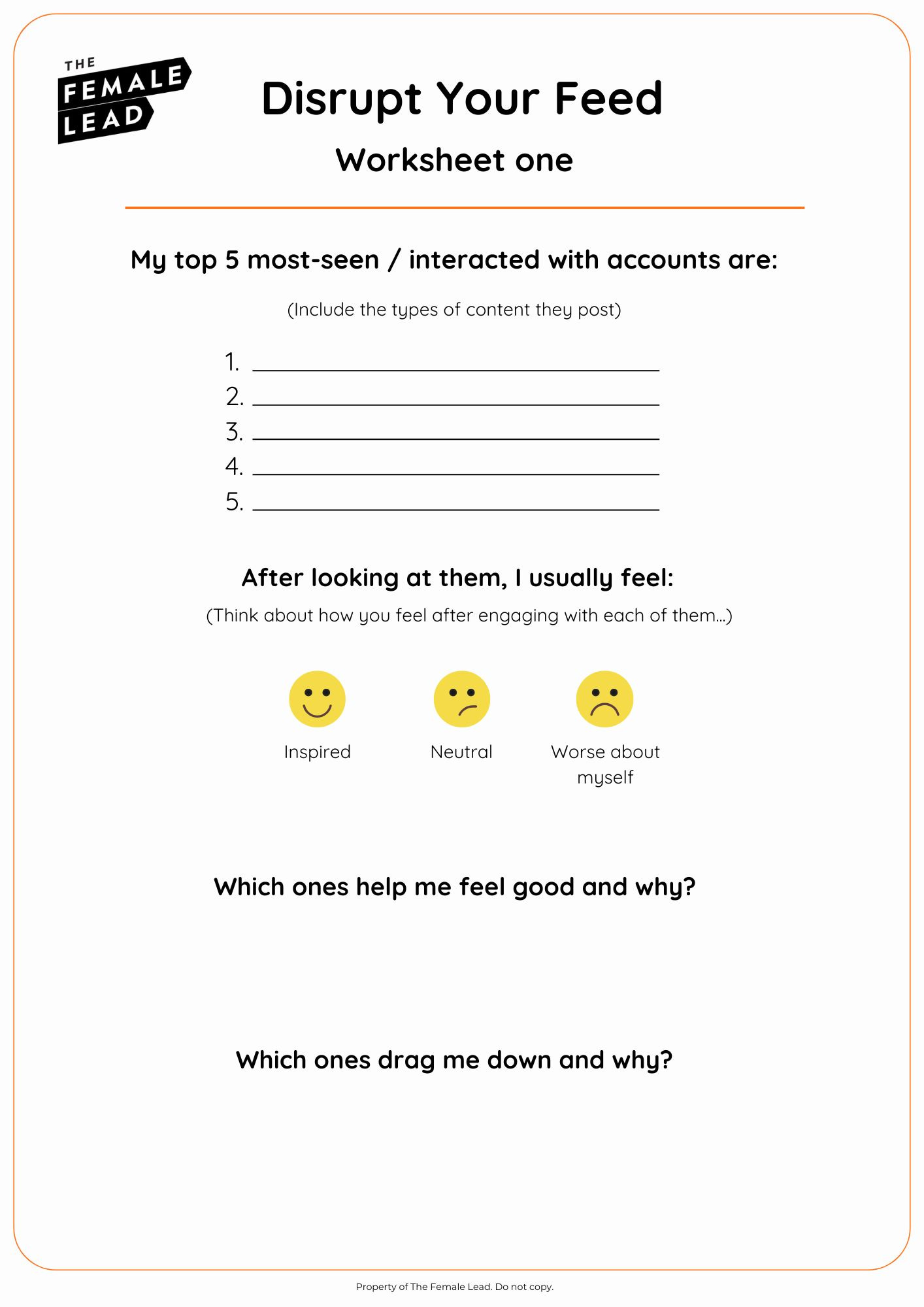
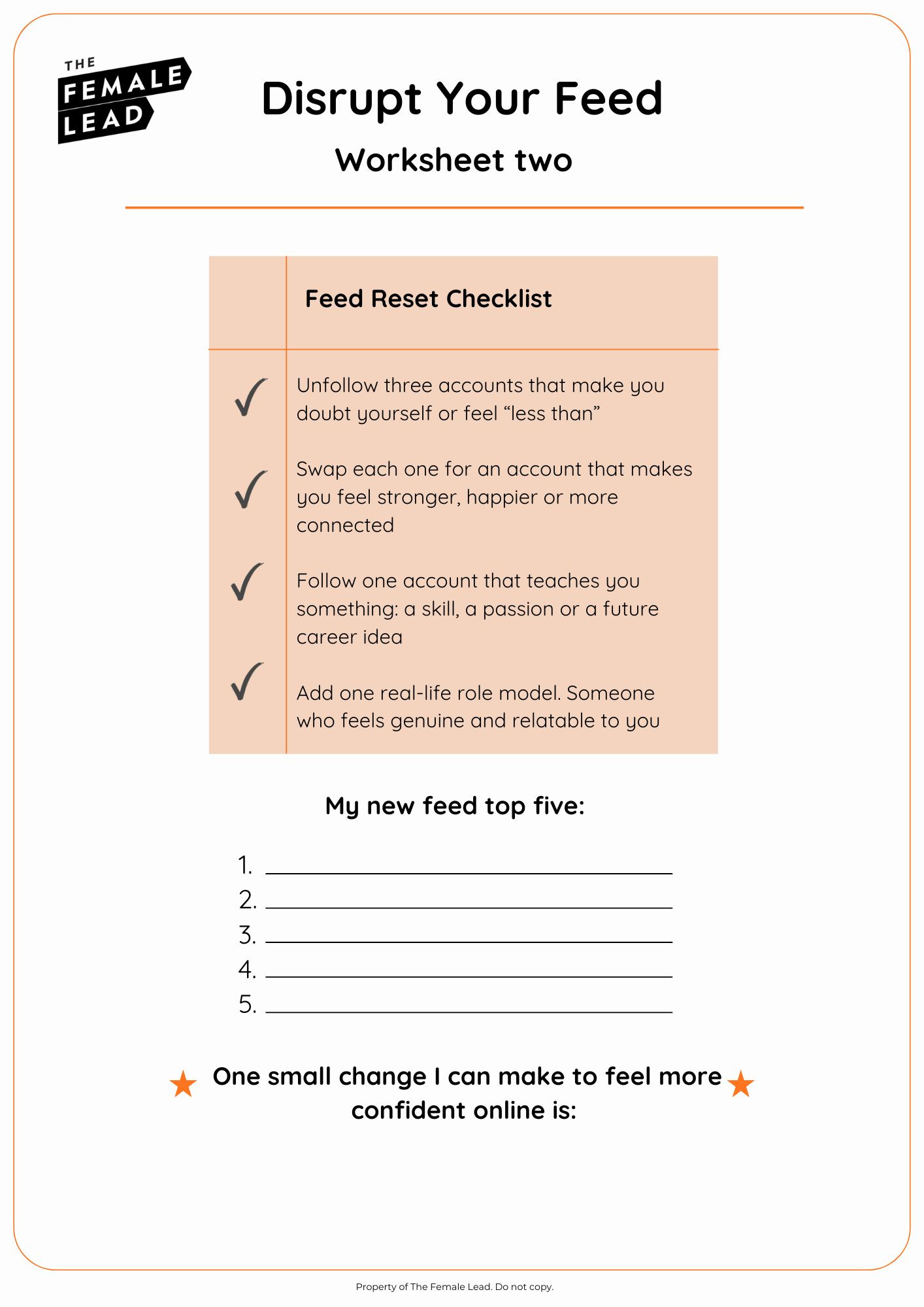
👉 This week, we’re helping young people control their social media with The Female Lead’s Disrupt Your Feed creators who bring honesty, joy, depth, representation and real-life inspiration. Disrupt Your Feed is a long running campaign designed to help women and girls take back control of their online lives.
Keep scrolling for our curated list of feed disruptors - voices worth celebrating, following and sharing.
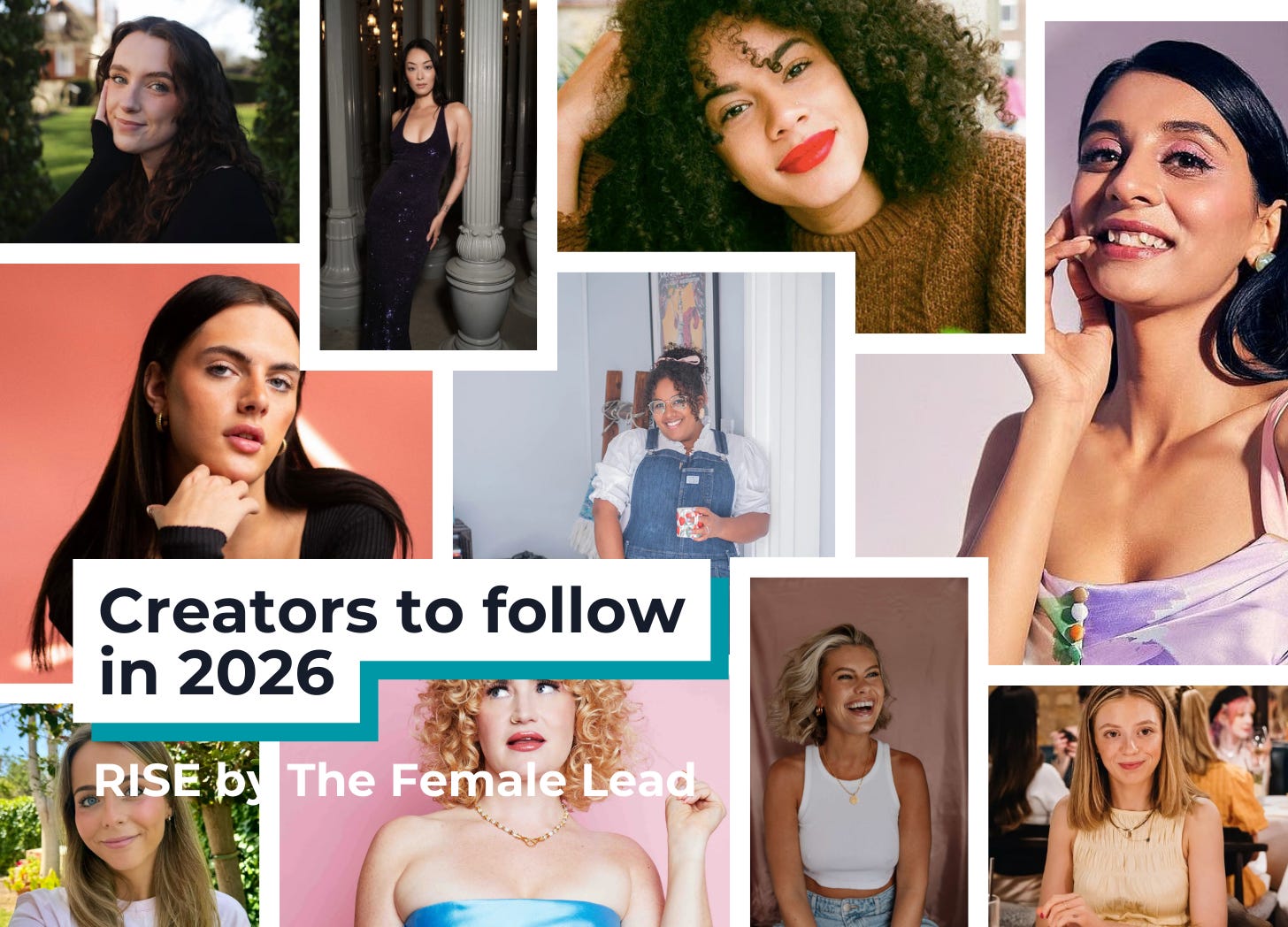
⭐ Top 10 Feed Disruptors for Young People to Follow
(Curated for balance, relevance, representation and real impact.)
Dolly Singh — Comedian, actor, creator
Funny, fearless and unfiltered, Dolly mixes character comedy with honest reflections. A brilliant counter to perfection culture.
📍 @dollysingh
Rina Sawayama — Artist & cultural disruptor
A bold voice on identity, race, sexuality and self-expression. Represents creative rebellion and standing out unapologetically.
📍 @rinasonline
Simone Powderly — Self-love advocate & teen girl mentor
Empowers young women through confidence, healing and community. An uplifting alternative to comparison culture.
📍 @simonepowderly
Bel Priestley — Actor & trans creator
A joyful, open voice for LGBTQ+ visibility. Shares humour, identity and self-acceptance with warmth and courage.
📍 @belpriestley
Ro Mitchell — Podcaster & mental health storyteller
Creates a safe, reflective space for talking about healing, growth and emotional honesty.
📍 @romitchell
Jaycie Fry — Creator & co-host of The Comfort Zone
Funny, relatable and grounding — Jaycie’s content shows that vulnerability is a strength, not something to hide.
📍 @jayciesdiary
Jemma Bella — Beauty & lifestyle creator with chronic illness storytelling
Shows resilience, humour and honesty about life with long COVID — representation young people rarely see.
📍 @_jemma_bella
Victoria Niamh — Recovery advocate & founder of The Glow Up Project
A powerful, hopeful voice for anyone struggling with body image, mental health or recovery.
📍 @victorianiamh
Grace Campbell — Comedian & filmmaker
Sharp, chaotic, hilarious — and brilliant for showing that women can take up space loudly and unapologetically.
📍 @disgracecampbell
Ghenet Randall — Writer & cosy-life creator
Her content is grounding, slow, and gentle — a necessary antidote to overstimulation and endless hustle.
Resources
👉 For Teachers/Educators
Try these worksheets as part of your next PSHE lesson exploring internet safety.
👉 For Parents/Guardians
Conversation Starters: Helping young people think about their life online
1. “What kind of stuff on your feed makes you feel good… and what content makes you feel a bit rubbish?”
A simple way to help them notice patterns without judging what they watch.
2. “Have you followed anyone recently who you think is actually good for your brain?”
Frames positive content as something they choose, not something you’re telling them to do.
3. “Do you ever feel like your FYP knows you too well?”
A gentle route into talking about algorithms, without sounding like a lecture.
4. “If you could swap one type of content on your feed for something else, what would you pick?”
Encourages agency - they decide what they want more or less of.
5. “Who online makes you feel seen or understood?”
A great way to surface what matters to them emotionally, and to check whether the influences in their world are positive ones.