
“I was groomed to send intimate images aged 13”
Coerced to send revealing photos aged 13 by an older boy at school, Roxy Longworth is campaigning for change…


TW: This article contains references to sexual exploitation, self-harm, and suicide.
When Roxy Longworth was just 13, she began receiving messages on social media from an older boy at her school. She was flattered and thought she was being noticed. In reality, Roxy was being groomed.
It began with chatty messages from a 17-year-old boy at her school. He was popular. “Everyone knew who he was, and I was just incredibly flattered,” Roxy tells The Female Lead.
It didn’t take long for the messages to change and take a sinister turn. He began asking her to send photos. When she refused, the response was not acceptance. It was a threat.
He told her that if she didn’t send what he wanted, “he would tell everyone at school that I was frigid and then no one would ever want to speak to me.”
“At the time - I was only 13 - that felt like a genuine threat,” Roxy tells us.
Roxy was coerced into sending intimate images. “I started sending photos in revealing tops or in a bikini.” Each image was met with compliments and praise. “It was this huge high, this rush,” Roxy explains. “I think I became a little addicted to that validation in the evenings.”
Eventually, she stopped. “I just felt too gross and was starting to hate myself.”
Then another message arrived. This time it was from a different boy at her school, also 17, someone she didn’t know. He asked her to send him a new photo. When Roxy ignored the message, he sent her four images he already had of her, shared without her consent by the first boy who groomed her. “That was just when my life imploded around me,” she says.
“I didn’t know this man and he owned me. Those boys controlled me from the very moment I sent that [first] photo,” Roxy tells The Female Lead.
The 17-year-old told her that if she didn’t send him whatever he wanted, he would send the photos around the school. “That was not an option,” Roxy says. She blocked him everywhere and waited.
When the images began to spread throughout the school, the emotional impact was overwhelming. “I just felt so small and guilty, and I felt so much shame,” she told us. “I thought my life was over and it was my fault.”
When the school became aware of what had happened, they punished Roxy, and not the boys. “I didn’t question when they didn’t contact the police.”
Roxy’s mental health deteriorated rapidly. “I started self-harming because I really believed that I needed to be punished more, that I had done this terrible thing,” she explains.
She stopped sleeping because of nightmares and tried to keep herself awake. Roxy began hearing voices and was eventually hospitalised, experiencing a psychotic episode, spending several months on suicide watch.
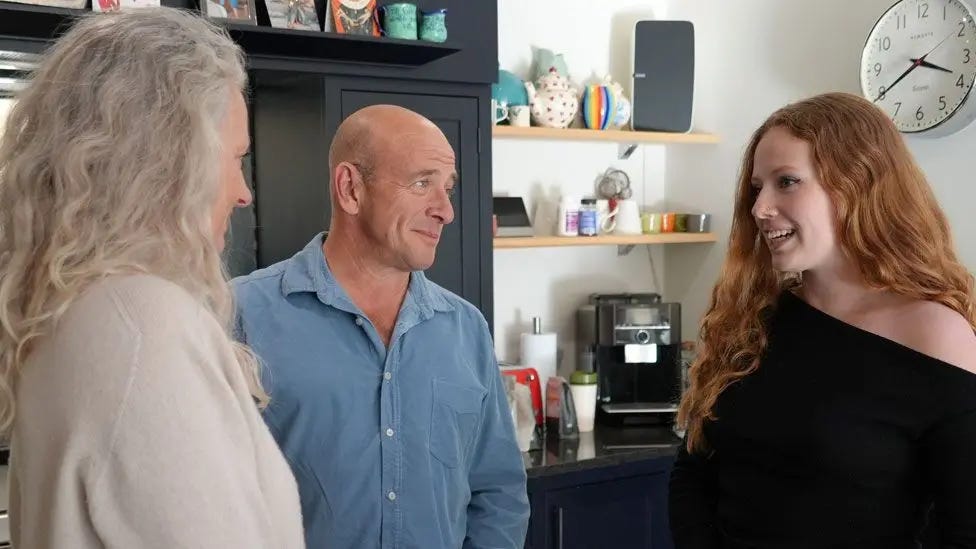
Roxy’s mum later became a critical source of support, staying with her constantly during her recovery. As the images circulated, her friends stopped speaking to her, and she was subjected to bullying.
Roxy survived that period of her life and returned to school, but withdrew socially and focused on her studies.
She later began campaigning with the NSPCC as an ambassador. “I was frustrated that people were not going directly to young people and hearing what their experiences were growing up online,” she says.
That frustration led Roxy to create Behind Our Screens, a platform designed to help young people talk openly about online harm. “Just to get young people talking about this stuff openly without the stigma, without the shame,” she explains. “That it could be a normal conversation, and you can go and ask for help without it ruining your life.”
Related articles
Elon Musk’s Grok scandal: exposing AI’s misogyny problem

Elon Musk’s AI chatbot Grok is facing international scrutiny after it emerged that men have been using the tool to generate sexually explicit images of women and girls without their consent. Campaign…
For Roxy, prevention must focus on those who cause harm, not those who are harmed. “Education is so important,” she says, “because there needs to be education to the person asking for the photos, which is regularly boys, about the impact that can have on the person on the other side of that phone.”
Her story shows how easily a child can be coerced, how quickly images are shared, that sadly, the victim can internalise shame, and how institutions fail to protect those most at risk.
Roxy is sharing her experience as the UK Government announces new measures to tackle image-based abuse and the use of AI ‘nudification’ tools, as part of its wider strategy to address violence against women and girls.
And she’s welcomed recent commitments to ban ‘nudification’ apps and strengthen device-level protections, saying that if safeguards like these had existed when she was 13, “my life would have been completely different.”
Find out more about Behind Our Screens here.
If you or someone you know, has been affected by any of the issues raised in this article, help is available. In the UK, you can text SHOUT to 85258 for free, confidential support 24/7, or contact Samaritans on 116 123.

Talk about turning trauma into progress. Roxy is amazing.
Thank you for speaking out and advocating for young people.
Did the perpetrators ever get investigated?