
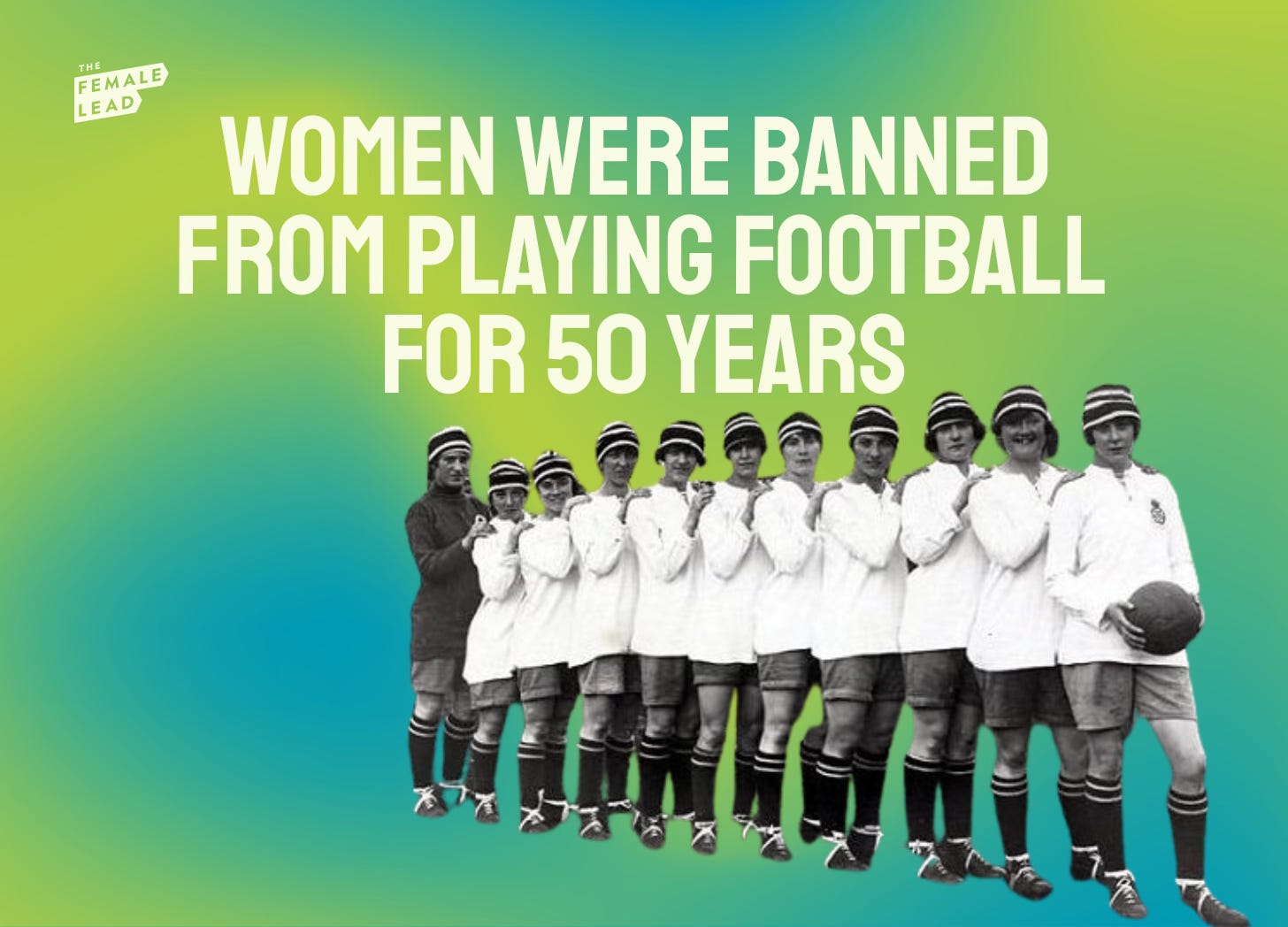
Women were BANNED from playing football for 50 years
A brief history of women’s football - and the Lionesses' historic comeback

Women have been playing football for centuries. One of the earliest references appears in a 1580 poem by Sir Philip Sidney, describing girls playing football with their skirts tucked up. Even Mary, Queen of Scots, is said to have owned what may be the oldest surviving football.
Although football was a popular pastime, it wasn’t until 1863 that the Football Association created a standard set of rules. The new laws helped make the game more organised and opened the door for greater female participation.
The first recorded women’s match took place in Edinburgh in 1881, when teams representing Scotland and England faced each other. Interest quickly grew, with crowds of more than 1,000 attending matches in Sheffield and thousands more turning up to watch the pioneering British Ladies Football Club in the 1890s. One of the era’s leading figures was Nettie Honeyball, founder of the club and a passionate advocate for women’s sport.


Women’s football truly flourished during the First World War. As women entered factory work in huge numbers, workplace teams sprang up across Britain. Factory football became a major attraction, and in 1917 the Munitionettes’ Cup was launched. The most famous team of the period was Dick, Kerr Ladies, who played hundreds of matches, raised money for charity, and featured legendary striker Lily Parr, one of the greatest goal scorers the game has ever seen.
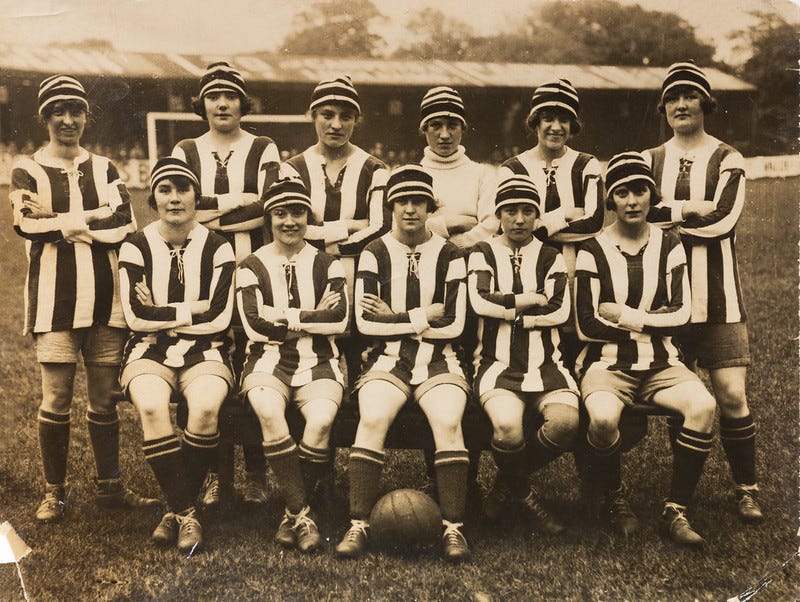
By 1921, around 150 women’s clubs existed and some matches attracted crowds of 45,000 spectators. Yet just as the sport was booming, the Football Association dealt it a devastating blow. On 5 December 1921, the FA banned women’s football from affiliated grounds, declaring the game unsuitable for women. The ban forced teams into parks and smaller venues for almost 50 years.
Despite the restrictions, the game survived. The English Ladies’ Football Association was formed days after the ban, while clubs such as Manchester Corinthians kept women’s football alive through the 1930s, ‘40s and ‘50s, even touring internationally and winning trophies abroad.
The tide finally began to turn in the late 1960s. The Women’s Football Association (WFA) was established on 1 November 1969 with representatives of 44 clubs attended the first meeting in London. After years of pressure the FA finally lifted its ban in June 1971. Women's football could now be played on FA-affiliated grounds and registered referees could officiate at women's matches.
That same year saw the first Women’s FA Cup, while England’s official women’s team played its first recognised international match in 1972.
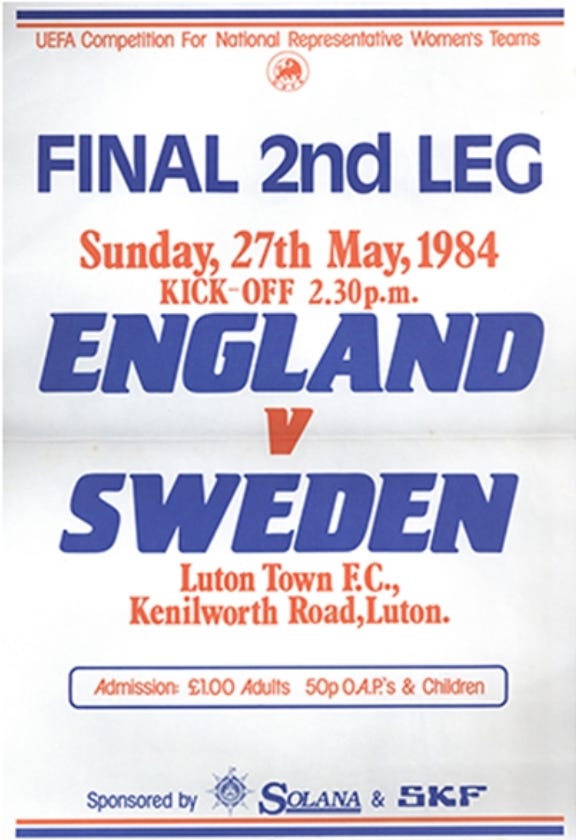
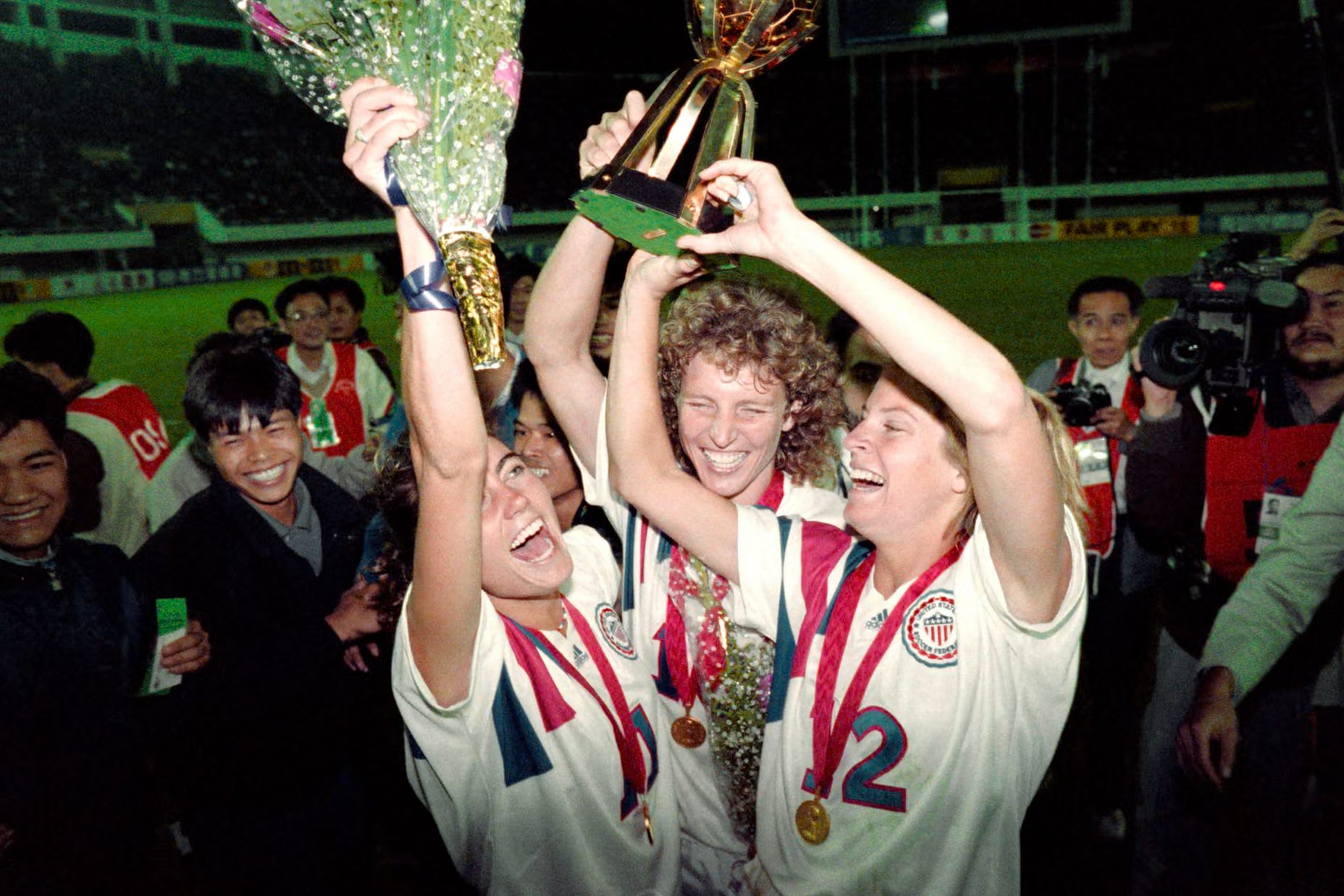
The following decades brought steady progress. England reached the final of the first UEFA women’s championship in 1984, and the 1990s saw the launch of a national league structure, the first strategic development plans, and increasing support from the FA. Women’s football was also growing worldwide, helped by the introduction of the FIFA Women’s World Cup in 1991.
Since the turn of the century, women’s football really transformed. By 2002 in England, it had become the top participation team sport for women and girls. The FA achieved this target three years earlier than expected. In the same year, Lily Parr of Dick, Kerr Ladies was posthumously inducted into the National Football Museum Hall of Fame, the first woman to do so.
England hosted the UEFA Women’s EURO in 2005, the Women’s Super League launched in 2011, and record crowds began filling stadiums. The Lionesses became regular contenders on the international stage, reaching the World Cup semi-finals in 2015 and 2019.
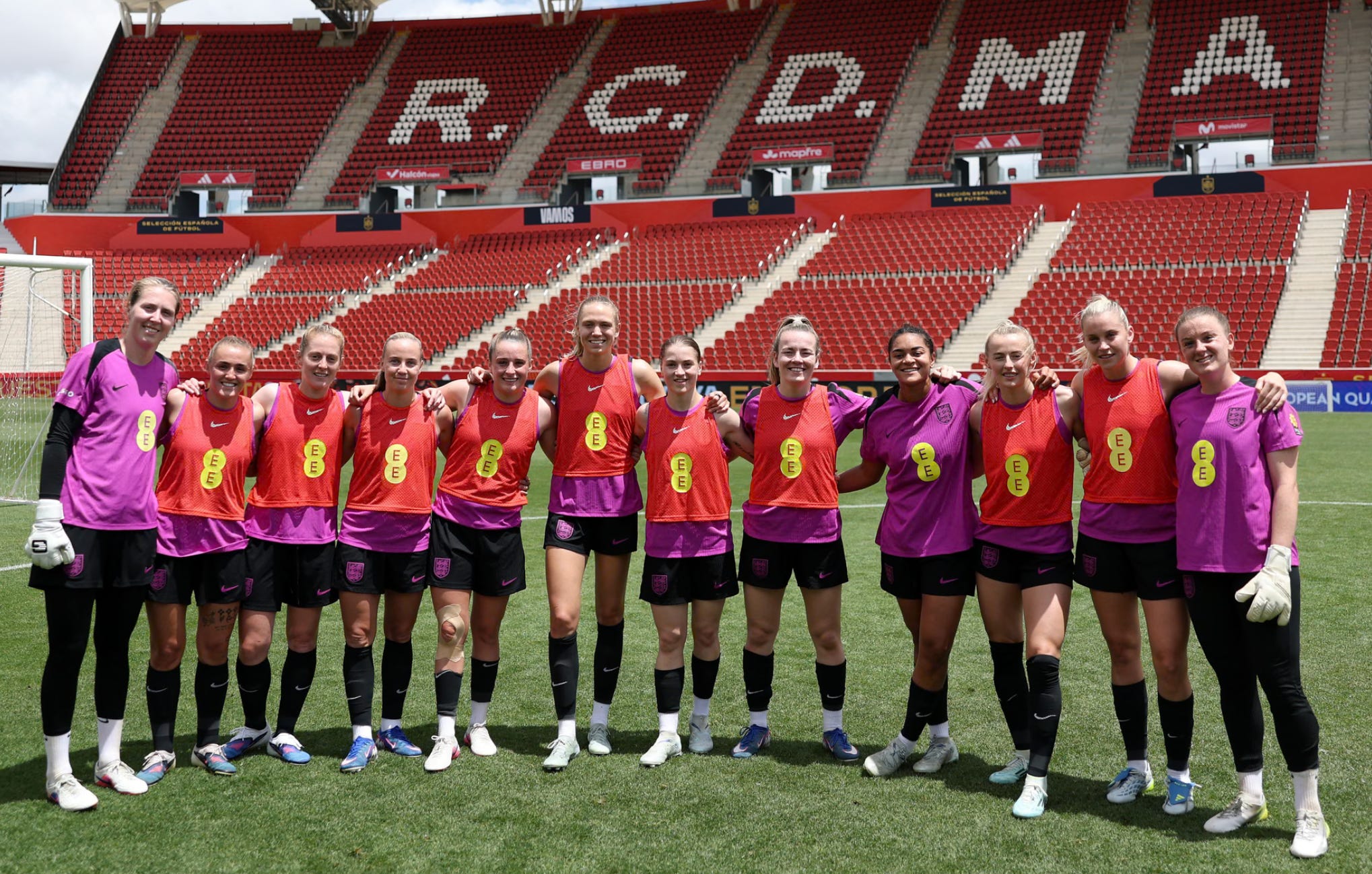
A defining moment arrived in 2022 when England won the UEFA Women’s EURO at Wembley in front of a record crowd, inspiring a new generation of players and fans. The Lionesses followed that success with a first-ever FIFA Women’s World Cup final appearance in 2023 and another European title in 2025.


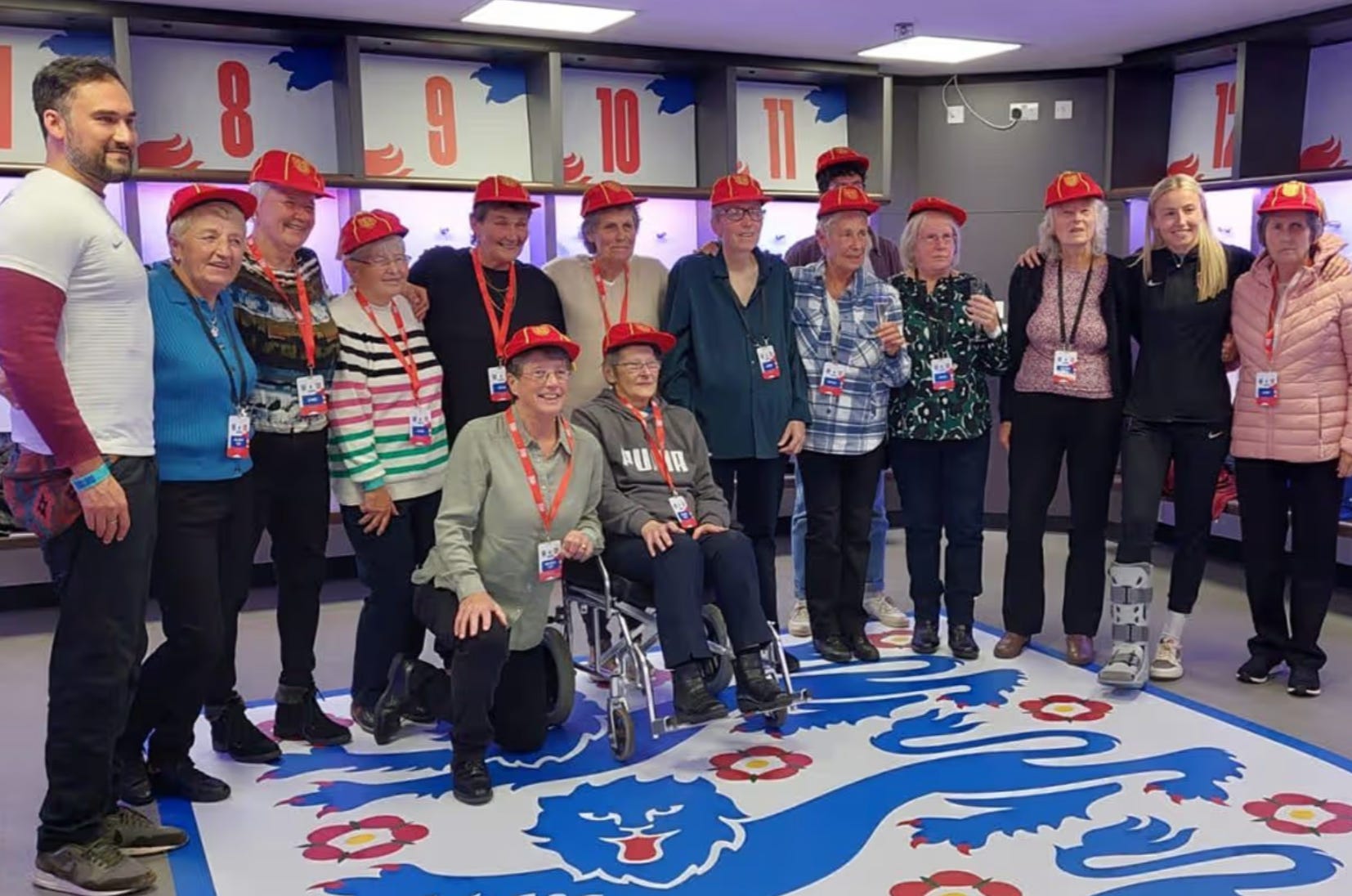
Another historic milestone in 2022 saw the original 1972 Lionesses finally awarded their official bespoke England caps, 50 years after their inaugural international match. The team's achievement - a 3-2 victory over Scotland on November 18, 1972 - was celebrated with a special legacy cap presentation at Wembley Stadium.
England’s back-to-back victories had an immediate impact, with searches for women’s football opportunities rising 196% the day after the EURO 2025 final. Five months later, participation was up 5%, while the number of female coaches and referees had increased by 12% and 29% respectively.
It also accelerated progress towards equal access to football for girls. The target for 90% of schools to offer equal access through Key Stage 2 and 3 PE lessons, originally set for 2028, was achieved three years early, giving 2.6 million girls access to football in PE, up 31% since 2020/21.
We're really only just getting to see what the sport can become when women are given the support, investment and visibility they deserve.
Reflecting on the success of 2025, Sue Day, Director of Women’s Football & Para Football at The FA, said: “2025 will be remembered as a historic year for women’s sport… That victory has ignited something powerful, strengthening a special connection with fans and driving more women and girls than ever before to play, coach, referee and get involved in football.”
“With record levels of participation in schools and clubs, there is so much to be proud of this year – but no room for complacency. We must use this momentum to drive the game forward. It’s up to all of us to keep building on the legacy of the Lionesses, ensuring the game continues to thrive for generations to come.”
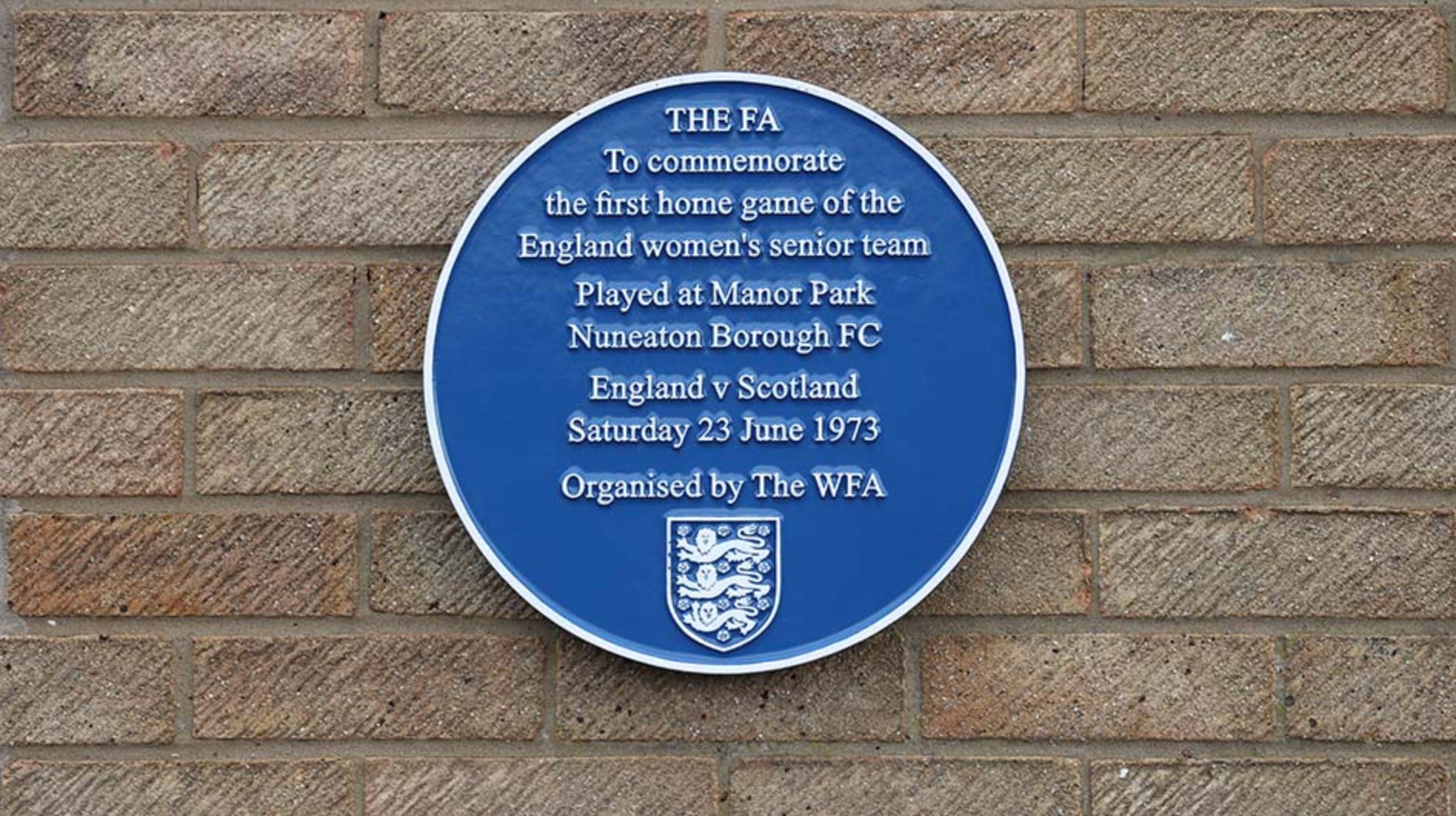
In 2026, a commemorative plaque was unveiled in Nuneaton to mark the site of England Women’s first official home fixture against Scotland in 1973, as part of celebrations for the Lionesses’ 500th match and to honour the pioneers who helped establish women’s football in England.
After missing automatic qualification for the 2027 World Cup, the Lionesses must now progress through two play-off rounds. England will first face Greece over two legs between 7–13 October, and if they advance, will play either Slovakia or Ukraine between 26 November and 5 December for a place in Brazil.

Another milestone was Lewes FC becoming the first pro or semi-pro club in the world to equally resource men’s and women in 2017.