
Why are women always waiting? The politics of the queue for the loo
Peequal co-founder Amber Probyn on why designing a women’s urinal is an act of equality


By Amber Probyn, Co-founder of Peequal
It started with a simple question: why are we queuing?
My co-founder Hazel McShane and I were both working at festivals during university. On our breaks, we’d choose between going to the loo, or getting food, simply because the queues were too long for both. Time and time again I would find myself waiting, whilst men whizzed in and out of their urinals - is my time really considered less valuable than theirs? Why do I have to wait?
The toilet queue is a visible example of how inequality can be hidden in plain sight. Queuing for the loo whilst men don’t is considered to be ‘part of being a woman’ and there is a resignation around changing this. Women’s sanitation has been underfunded and overlooked because it’s been seen as “unsexy” or “unspeakable”.
We experienced this resistance after every conversation with a quizzical customer or an unsupportive investor, but we had to keep reminding ourselves that this problem isn’t just an inconvenience, it’s an inequality and equal sanitation will make a positive impact for so many women.
Fuelled by our own frustration, Hazel and I set about developing our design. After many prototypes, testing and user-centred feedback, we created Peequal, the UK’s first squat and go women’s urinal. It’s practical, quick & simple to use, sustainable, and even joyful.
When we launched at Glastonbury in 2022, everything changed. The response was overwhelming, from investment interest to millions of views on TikTok and features in the Times, Women’s Hour and the BBC. But the online reaction was also a reminder of how taboo this topic still is. We received hundreds of supportive messages along with hundreds of hate. This reaction highlighted the controversialness around women’s sanitation, proving just how important it is to keep having these conversations, because without them, the problem remains unchanged and women’s needs will never be designed for.

Of course, building something new means facing pushback and sometimes gender bias. We’ve been laughed at in investor meetings, mistaken for the intern instead of the boss, even denied access on sites because we “don’t look like we do sanitation”.
You learn quickly that as a young woman in business, you often have to earn credibility instead of starting with it. Our journey hasn’t been easy. We founded the company in 2020 which was not ideal timing for an event-based business during Covid. But somehow, we raised £250,000 on a CAD model and true passion to see change happen. Since then, we’ve raised over £1 million, built a growing team, and supplied more than 40 major events, from Glastonbury to the London Marathon. Over one million women have used Peequal and have benefitted from the efficient, dignified and liberating experience we provide.

Running a start-up isn’t glamorous. It’s hard, messy and a constant juggle of people, plans, and priorities, all while keeping your foot on the accelerator. But when you truly believe in the problem you’re solving, that belief carries you through the chaos.
I’ve learned a lot about leadership along the way. That I have more capacity than I ever realised. That relationships and networks are everything. And that rest is as important as the work itself – burnout helps no one.
Our focus is currently on the UK market, but we’re already getting international demand. Long-term, we want to see Peequal being a standard provision at events, providing equal access to sanitation, for women everywhere. This isn’t a nice-to-have, it’s a fundamental requirement.
For anyone starting their own venture, my advice is simple:
Fall in love with the problem, not the solution - this allows you to adapt and evolve your business proposition to truly solve the problem
Find supportive networks - whether it’s accelerators, mentors,university start-up groups, try to surround yourself with those who lift you up, share contacts and open doors. Hazel and I have found incredible allies, men and women alike, who genuinely want to help us succeed.
Don’t let others project their limits onto you. When someone tells you something “can’t be done” they’re revealing their fear and limitation, not that you can’t do it.
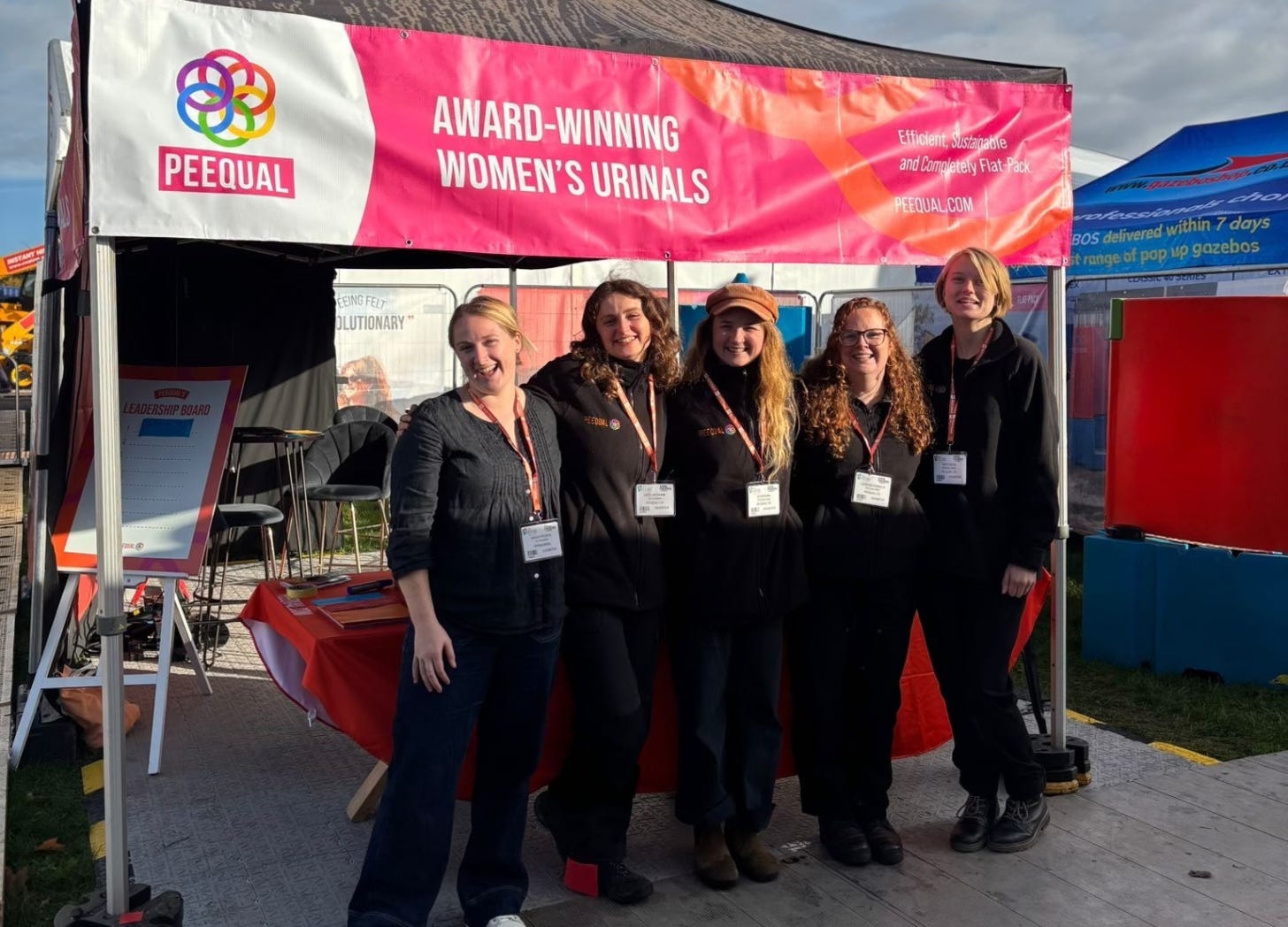
At Peequal, we often say, “Why not us?” because real change starts when you stop waiting for someone else to fix it and start believing you’re the one who can make it happen.
Find out more about Amber and Hazel’s work at www.peequal.com.