
What happens when motherhood is delayed, reshaped or never arrives at all?
Ex-Sunday Times Editor Audrey Ward explores the complicated road to motherhood...

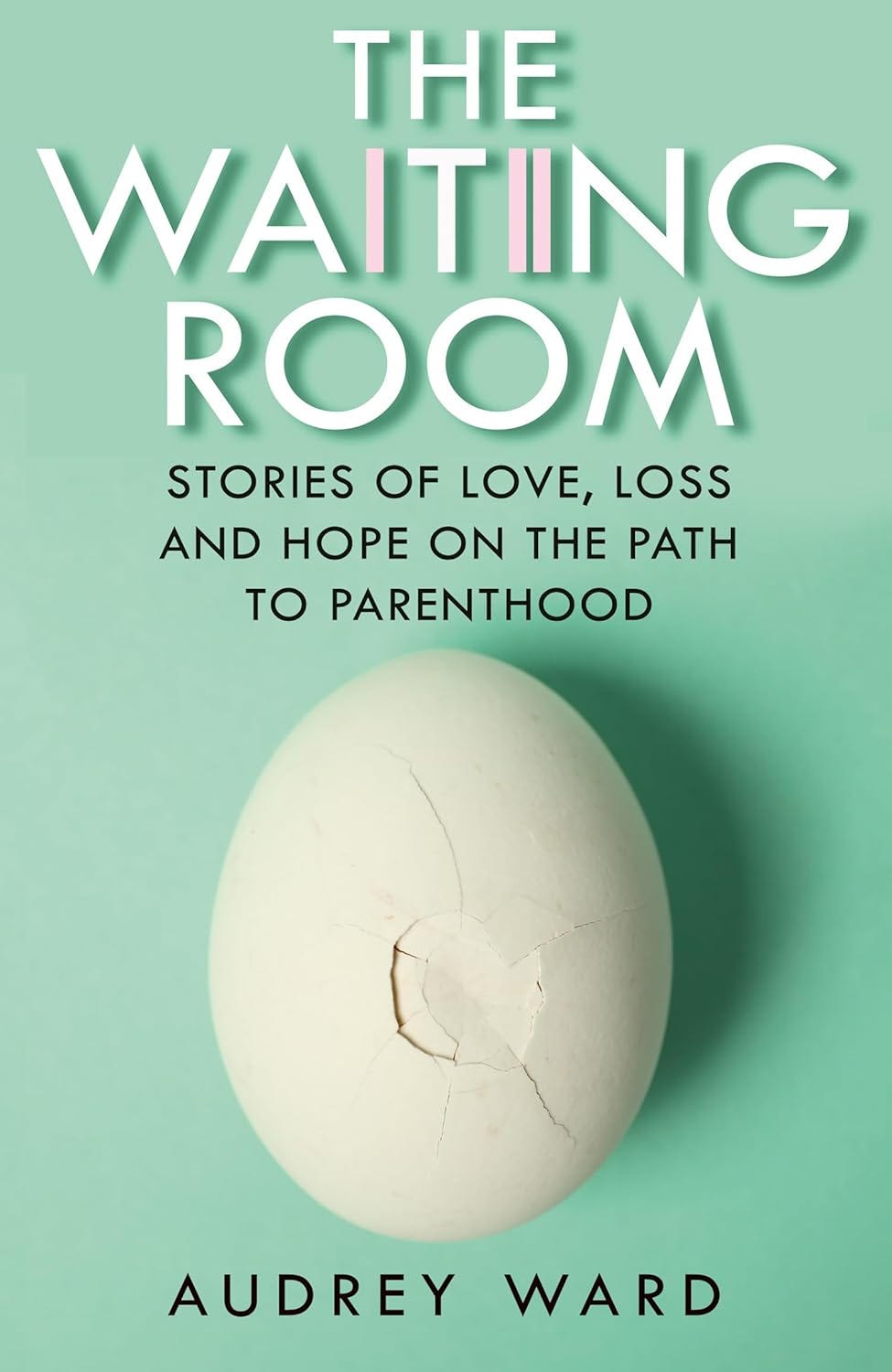
By Ex-Sunday Times Editor, Audrey Ward, author of The Waiting Room: Stories of Love, Loss and Hope on the Path to Parenthood
When you first start trying for a baby it feels temporary, a brief spell of waiting before real life begins. For many, real life arrives quickly but for others, the months drag on. A due date might come and go with no-one marking it but you.
Late at night, you’ll search fertility forums for reassurance and advice. You’ll wait for blood tests, for test results, for phone calls, for scans, for hospital appointments. We often talk about what it’s like to become a mother or to be a mother. But we don’t really talk about what happens when motherhood is delayed, reshaped or never arrives at all.
Over the past year, I’ve spoken to dozens of women aged between 28 and 78 who, like me, existed in the wait and I collected their stories for a book. They talked about everything from stillbirth to secondary infertility. They recounted their experiences of IVF, solo parenting and surrogacy. Others described watching the door to motherhood slowly close.
If you’ve waited for a baby, I want to give you a sense of how things look and feel on the other side and reassure you that many women’s stories fall outside the mainstream narrative. With the benefit of my own experience and the insight of others, here’s what I wish I’d known.
Infertility has a way of infiltrating every aspect of your life
Even without my own medical notes in front of me, I remember how quickly my body became something to monitor and mistrust. I remember how my relationship with my husband came under strain too. I would seethe with anger when his work trips abroad clashed with my ovulation window.
Others could relate. “One evening I broke down in tears,” a woman wrote. “My husband had been detained at work and hadn’t made it home in time for us to try for a baby during the ‘fertile window’.”
Similarly, relationships with friends and family were tested. The same woman told me, “I wanted to be happy for friends and family who were having babies but it was increasingly difficult to be around them. My husband and I were becoming more reclusive”.
The women also discussed financial pressures and the impact on their career. Blood tests scheduled for early morning, scans squeezed in at lunch, promotions postponed.
Stories have a way of surfacing
Shame and silence are tied to infertility and baby loss, making many feel profoundly alone. One contributor told me, “When I was struggling with infertility, it felt like my secret, like a curse I carried around with me”. But what surprised many of the women, myself included, was how quickly sharing our stories created connection. Doing so gave others licence to speak. “It’s only since we started trying to have a family and I opened up about my experiences that I’ve realised how many women have had a tough time with infertility, miscarriage, stillbirths, fatal foetal abnormalities and complications with childbirth.”
Related articles


You’ll learn a whole new vocabulary of loss
I was stunned by the number of those who, like me, had never heard the term ‘missed miscarriage’, had never known that a pregnancy could end without the body recognising the loss. It was a sonographer who caught me up. “There’s a foetus but no heartbeat” he told me.
One woman described her experience of a medical termination, six months into her first pregnancy. “On a Friday I was given pills to end the pregnancy and on Monday I had to deliver the baby.” She was blindsided when she later started lactating, her body believing she had given birth to a healthy newborn. “I hadn’t been told that my breasts would become swollen and full of milk.”
The medical language could feel brutal; a miscarriage is a ‘spontaneous abortion’. ‘Evacuation of retained products of conception’ is medical speak for the operation to remove what someone knew to be their baby. One woman who had a medical termination after catastrophic complications told me she was heartbroken to hear her doctor describe the operation as an induced abortion. “I am - and always will be - pro-choice,” she wrote. “But this wasn’t that. Language matters.”
No one emerges unchanged
Many said the experience had changed them; they felt more resilient and empathetic. Others responded by creating the support systems that had been lacking for them - they founded charities, businesses and worked on creative projects. A few advocated for change within their companies, bringing about a more supportive work culture. But as one woman reflected “with the joy and the gratitude there is always a tinge of grief”.
Motherhood can arrive in a different way
For some, moving forward meant taking an indirect path to parenthood. “It would have been comforting to understand earlier that it might take several tries [of IVF] and that people who take other routes to parenthood are just as fulfilled,” one woman wrote.
Others became parents through solo parenting, surrogacy, donor conception and adoption. A solo mum said: “While my story didn’t follow the expected order, it’s still a love story of sorts. It’s the story of choosing to become a mum, even when the path wasn’t straightforward.” The words of one donor conceived mum could apply to anyone considering adoption, surrogacy or donor conception: “Something inside me clicked. He was mine. It didn’t matter how he came to me.”
A life without children can be full of love and purpose
For others the hardest shift was accepting they wouldn’t go on to have children. Yet they surprised me by writing about how they found peace and purpose. “I love my childless life, and no one is more surprised about that than me,” one told me. They rebuilt their lives in unexpected ways. Some became step-parents or godparents. One moved on from her dream of becoming a mother through endurance sport. Another found meaning through campaigning for reform. “It still gets me sometimes, a pang of emotion about not having children, but I don’t regret it,” she said. For another, the menopause spelled freedom. “While it brought a finality to the idea of being a mother, it also released me from my hormonal urge to have children.”
We are sold the idea that motherhood is the defining shape of a life but the women I spoke to challenged that narrative. “It’s not about being defeated. It’s about knowing when it’s time to gently let go of your imagined life and begin living life as it is.”
© Audrey Ward 2026. The Waiting Room: Stories of Love, Loss and Hope on the Path to Parenthood (HarperCollins £22), published on 21 May.
