
The play reminding us all that girlhood isn’t trivial
Kimberly Belflower’s John Proctor Is the Villain demands we finally take teenage girls seriously

By Freja Love, Social Producer at The Female Lead
I went in knowing very little about John Proctor, Is The Villain (and about The Crucible, sorry!), but I’ve been thinking about it ever since.
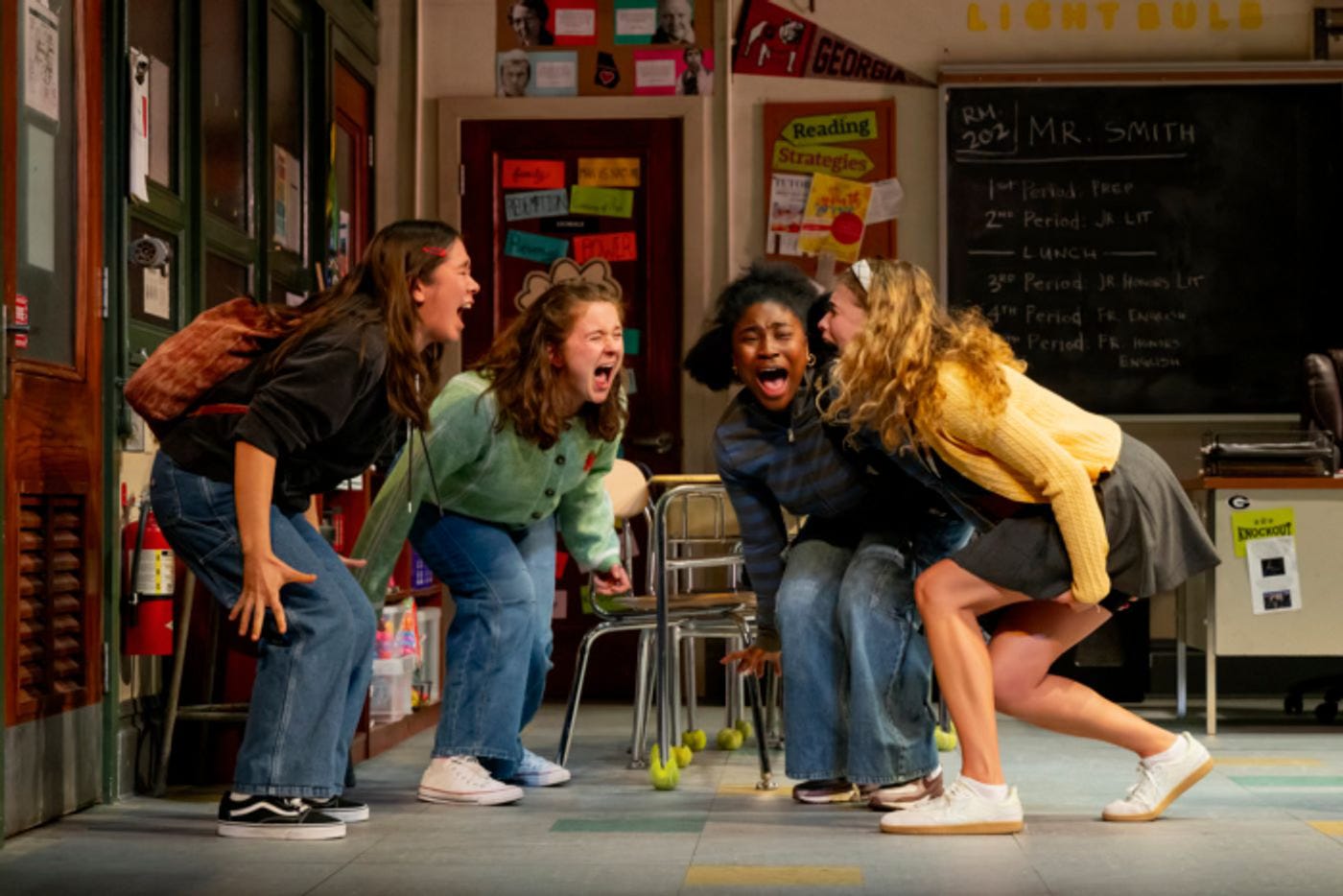
Written by Kimberly Belflower, John Proctor Is the Villain drops us into a small-town Georgia classroom in 2018, where a group of 16-year-olds are studying The Crucible as the fallout of #MeToo hums in the background. As their awareness of what’s happening - both globally and within their own community - sharpens, the girls begin to question things. Beth, an enthusiastic high-achiever, is spurred on by new student Nell to set up a feminist club, with their attentive and outgoing teacher, Mr Smith, stepping in to support it. What starts as literary analysis quickly spirals into something far more personal: a messy, funny, devastating interrogation of power and belief that dares you to reconsider something you thought you understood.
But if the play interrogates power, it centres something else entirely: teenage girls. And crucially, without trivialising their problems.
“One of the biggest takeaways is to take teenage girls seriously,” Director Danya Taymor tells me. “To really listen to what they’re saying.”
It sounds obvious, but apparently it isn’t.
“They are really formative years of your life. Things that happen to you absolutely shape your worldview.”
Dónal Finn
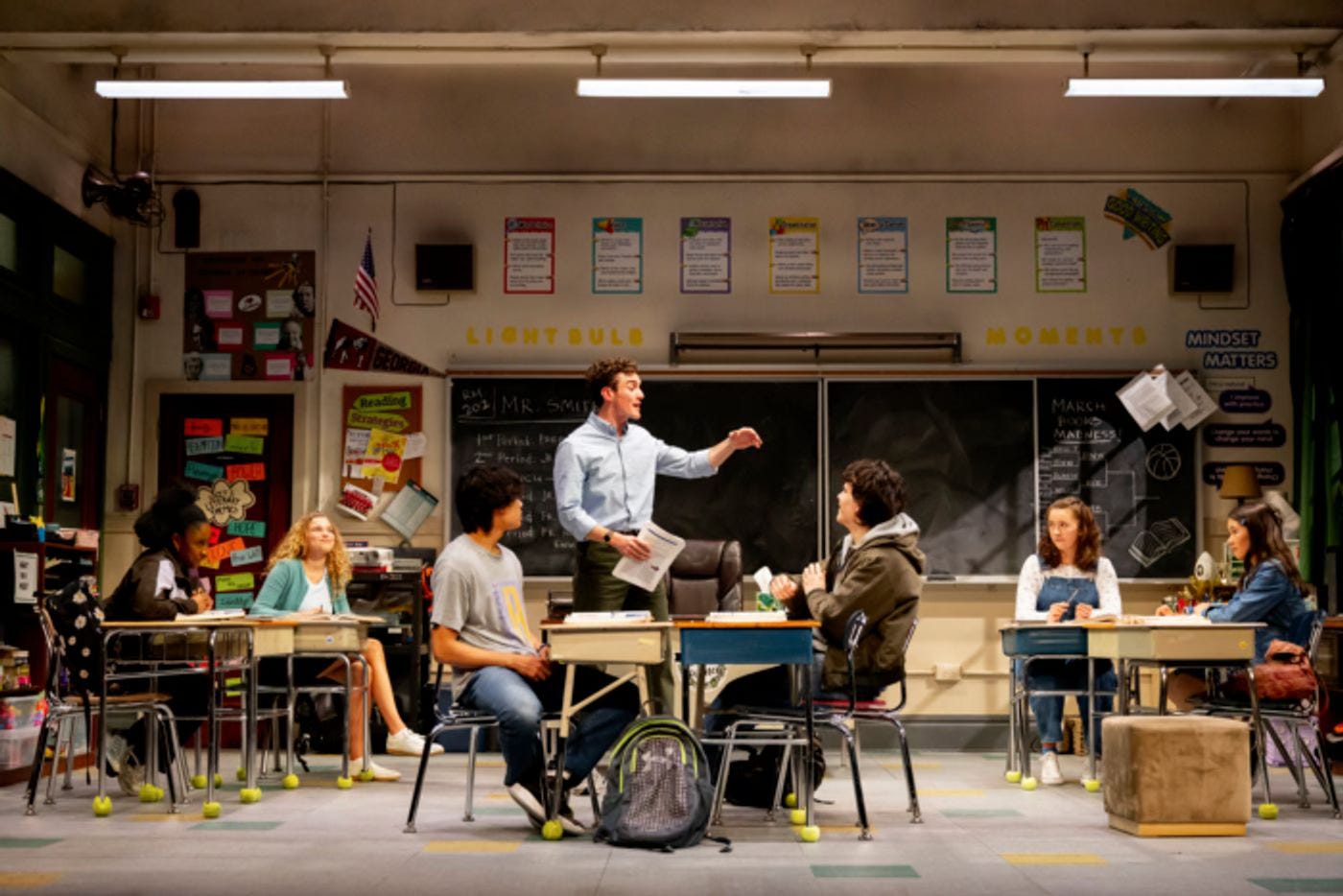
Dónal Finn, who plays the charismatic teacher, Carter Smith, points out just how rare it is.
“Other dramas that are about that time in your life can make it seem quite trivial,” He says “Problems that you have as a 15 or 16 year old are treated with a kind of flippancy, like, ‘it’s not that important’ - but they are really formative years of your life. Things that happen to you absolutely shape your worldview.”
Clare Hughes, who plays privileged Ivy, puts it just as clearly: “It’s really easy to dismiss how big your feelings are at that age… but they’re going through completely life-altering moments.”
The play refuses to trivialise what the young women have to say. Instead, it treats their experiences with the same weight you’d give any “serious” drama - something Danya was intentional about from the start.
“I approached it like it’s Shakespeare or Chekhov,” she explains. “When you treat the text seriously, you take the characters seriously too.”
Lauryn Ajufo, who plays new girl Nell, describes it as watching a group of girls try to make sense of something they know isn’t right: “There are things happening in the play that are not normal, but society has allowed it to be… and what you see is a group of girls who discuss and debate that, and try to find the right within the wrong.”
“It’s a really beautiful, messy portrayal of young women,” Clare adds, explaining how every character makes mistakes, but isn’t reduced to them.
Belflower’s dialogue perfectly captures the way young girls talk to each other with humour, vulnerability, and an undercurrent of everything they’re absorbing about the world around them.
These girls aren’t perfect feminist archetypes - they contradict themselves and get things wrong. And it’s this refusal to simplify things that gives the play its edge.
Instead, it becomes a brilliantly accurate reflection of teenage girlhood: the intensity, the certainty, and the lack of language for what you’re actually feeling. They’re figuring things out in real time - feminism, identity, friendship, love, anger - and, in doing so, begin to find their voices.
“It’s about finally being able to say, wait, I have opinions,” says Molly McFadden, who plays their well-meaning guidance counsellor Miss Gallagher, “I can disagree with what I’ve been told is right.”
“I just hope audiences feel,”
Danya Taymor
That gut feeling - when something doesn’t sit right, even if you can’t fully explain why - came up again and again.
Holly Howden-Gilchrist, who plays naive but eager Beth, described it as a physical feeling before it was a verbal one: “I remember being 14 and not having the words to express how I felt… it was just a full-body feeling of, ‘this is injustice.’”
Clare shared something similar. She described that time in her life as the first moment she felt truly fired up by what she believed in - particularly when it came to defending her friends. “Some men were being truly awful,” she said. It wasn’t about standing up for herself yet, but “batting for your friends” - an early, instinctive feminism built on loyalty and anger.
I asked the cast what they want audiences to leave with.
“I’d like people to leave with more questions than answers,” Lauryn said.
“When the system fails, you turn to your community,” Sadie Soverall said. She plays Shelby - witty, sharp, and awkward - who returns to school halfway through the play carrying more than her fair share of emotional baggage. “That’s a really important message right now.”
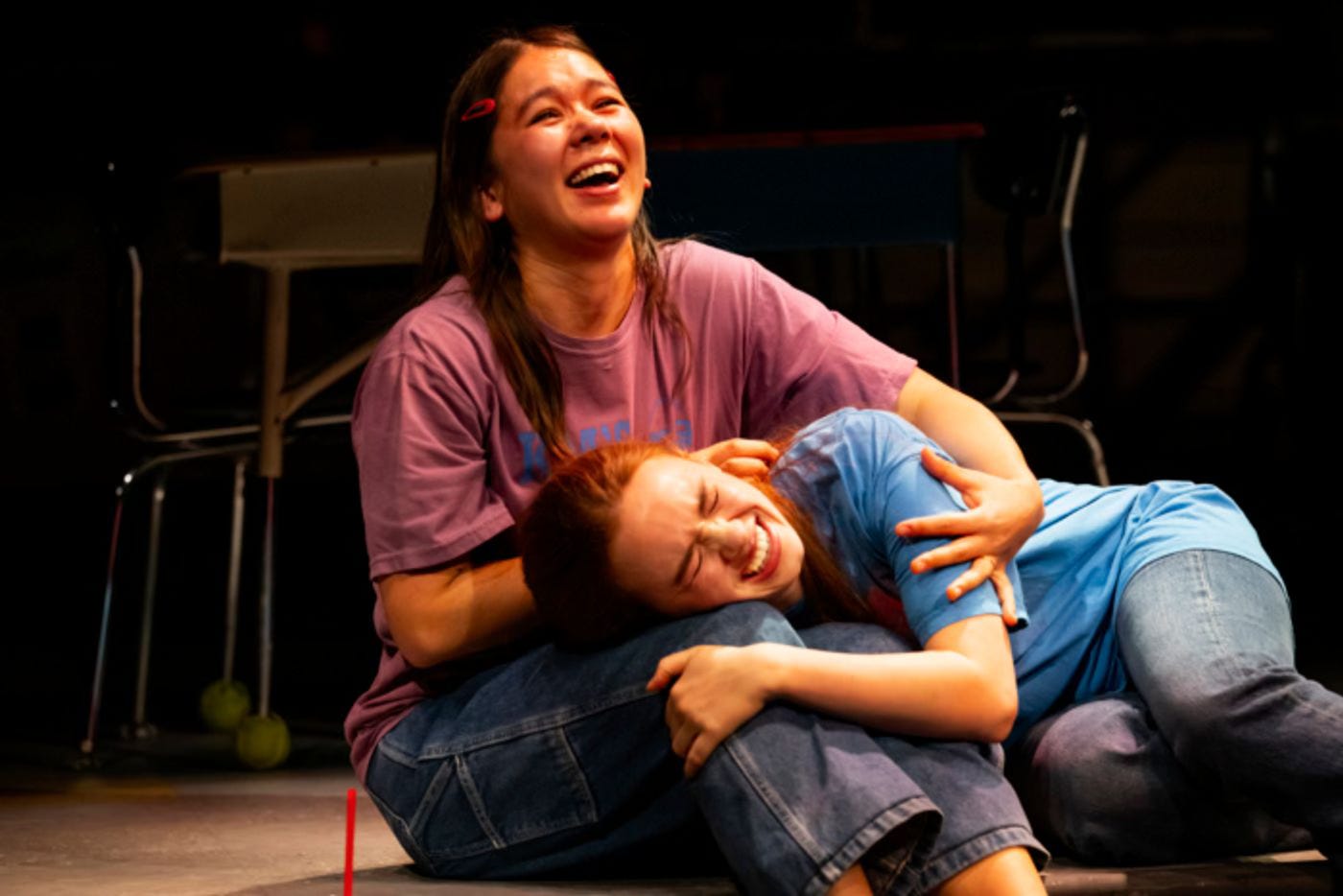
Danya echoes that same complexity when she talks about the play. There is no singular message, because there can’t be.
“Things are not black and white. There are no absolutes. Real life is complicated and messy and hard to unpack.”
“I just hope audiences feel,” She says.
I don’t doubt that for a second.
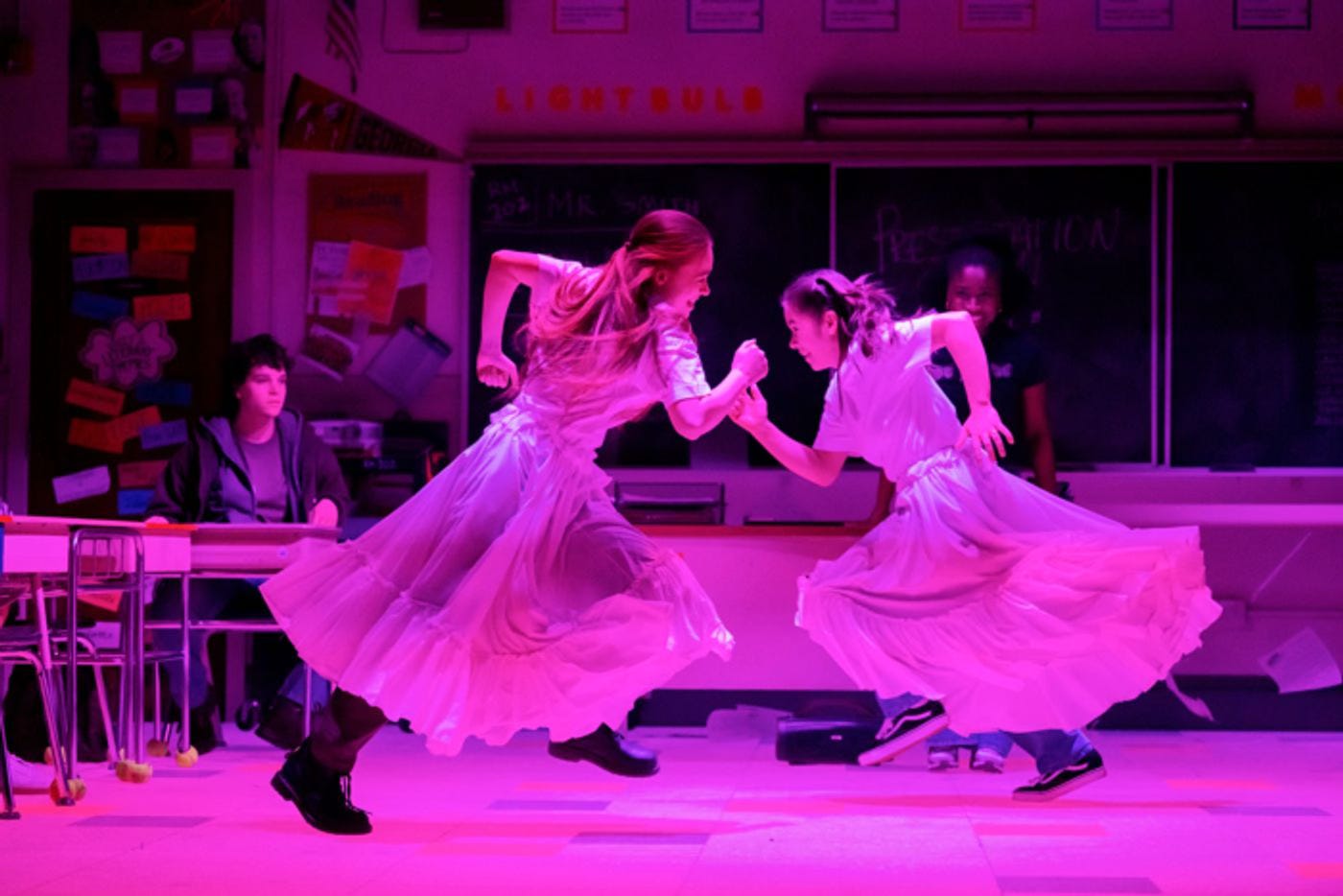
John Proctor Is The Villian runs at the Royal Court Theatre in London until 25th April
The ensemble cast include: Sadie Soverall (Saltburn), Holly Howden Gilchrist (I Swear), Lauryn Ajufo (Boiling Point), Clare Hughes, Miya James, Dónal Finn (Hadestown, Young Sherlock, The Other Bennet Sister) , Molly McFadden (Finding Joy), Charlie Borg and Reece Braddock, directed by Danya Taymor.
