
“People want to be seen as more than their job title”
Ella Robertson, MD of the global charity One Young World, on activism, negativity and why people want to be seen as more than their job title.

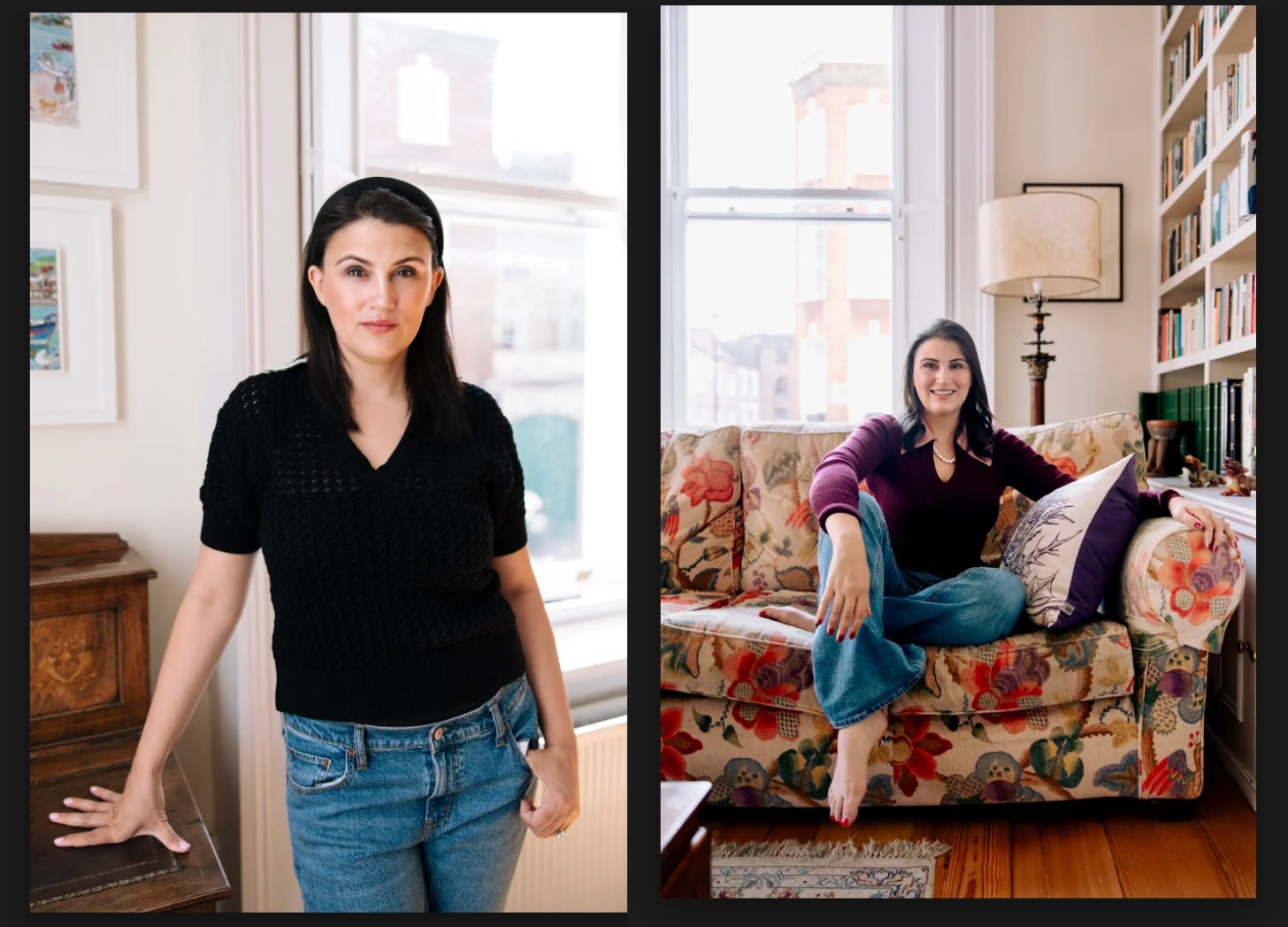
Ella Robertson oversees the One Young World’s global programmes, and international events including the annual summit, which this year takes place in Cape Town between 3-6 November. The charity connects and supports 20,000 young leaders from over 190 countries. She is a TedX speaker and also co-author of How To Make A Difference: The Definitive Guide To Activism (Hachette 2019). She has also written for Fortune and The Times. Here, she speaks to Andrea Thompson, former editor-in-chief of Marie Claire UK, about championing women and never underestimating your influence…
How did you become a leader in the charity sector?
I fell into working at One Young World by accident after interning at the charity in 2009, the year it was founded, while I was at university studying law. It was a small team with huge ambitions, and I loved the energy of building something from the ground up.
When I graduated in 2011, I gave up my training contract at a magic circle law firm, rolled up my sleeves and started working there full time. Every year the organisation grew, the community grew, and so did my role. I’ve never really felt the need to leave because I’ve never stopped learning.
What excites you about work?
After 17 years we’re still growing. Alongside my role as Global Managing Director, I’m now also Executive Director of One Young World US, where I’m focussing on our philanthropy network, and connecting with new people and commercial partners who want to invest in the next generation of leaders. This is a particularly exciting year because the One Young World summit will take place in South Africa. It will be the most international event ever hosted on the African continent and marks the 50th anniversary of the Soweto Uprising, commemorating the role young people have played in shaping South Africa’s history. Youth unemployment is a global crisis right now. My hope is that we can work with our community this year to find solutions.
What have been the highs and lows?
The highlight is easy: standing in an arena each year with over 2,000 young leaders from more than 190 countries and seeing what this community has become and the life-changing work the young people are doing each day. It’s also great to be able to host an annual conference where these young people get to be inspired by global trailblazers from Emma Watson and Cher to Dame Jane Goodall and Nazanin Zaghari-Ratcliffe. The low point was undoubtedly COVID. As an organisation whose model relies on gathering people from around the world face to face to inspire one another, lockdown was really rough. Overnight we had to rethink everything. Looking back, though, it made us a far more resilient and creative organisation, and we launched a fund for young leaders on the front lines of the pandemic which I’m still very proud of. Since then we have granted more than $3,000,000 to young people.
You’ve worked with heads of state, celebrities, Nobel laureates, and influential figures from business and civil society - how do you ensure you are genuinely influencing change?
One Young World has taught me that the world is built on relationships, not transactions. Of course you need to be focused on the mission, but it’s important to remember that people are people. Presidents care about what their spouse thinks; CEOs are proud parents; Nobel Peace Prize laureates have hobbies they would rather talk about than their accomplishments. All people want to be seen as more than their job title.
Finally, I try to treat everyone exactly the same. Whether someone is a volunteer, a cleaner, or a Head of State, courtesy is so important. It’s the right thing to do, but it’s also one of the wonderful things about One Young World… you never know if the young delegate you met over coffee will go on to become the next leader of a huge corporation or country.
How do you deal with negativity?
Thoughtful criticism makes organisations better, and we’ve changed plenty of things over the years because people have challenged us constructively. Cynicism, on the other hand, is easy and rarely useful. It’s very easy to sit on social media and be snarky about people trying to make a difference. It’s much harder to actually get out there and do the work.
I’ve always loved Theodore Roosevelt’s idea that “the credit belongs to the man who is actually in the arena.” I’d much rather spend my time supporting people who are out there trying to solve problems than responding to people throwing peanuts from the sidelines. When you can point to real, measurable impact statistics, the snark tends to get pretty quiet.
Who are your female business mentors?
I’m very lucky to have worked with Leena Nair, the current CEO of Chanel for more than a decade, first through her role at Unilever and today through our ongoing partnership with Chanel and the Chanel Foundation. What I admire most about Leena is her optimism. She never seems to complain about the scale of the challenge in front of her; she simply gets on with the job and focuses on making as much impact as she can in whatever role she’s in.
As co-author of How to Make a Difference, a practical guide to activism, what advice would you give women about small steps they can take to make a difference?
Don’t feel you have to become someone else to make a difference, your own skills are probably your greatest contribution.
The most effective activists I’ve met are the ones who apply the skills they already have to the causes they care about. You don’t need to become a marine biologist to help protect the oceans. If you’re a chef, host a fundraising supper. Mentoring a teenager, running a fundraiser, or serving on a local committee all count too.
Finally, don’t wait until you have endless free time. Give the time you can, with the skills you have, to the causes you care about. Small contributions, made consistently over many years, often achieve far more than one grand gesture or stunt.
What’s your message to the The Female Lead community?
Don’t underestimate your influence. You don’t have to have millions of followers, hold public office or run a global organisation to change someone’s life. The way you lead your team, support your friends and raise your children all hold tremendous power.
I’d also encourage women to champion one another across generations. Too often, both younger and older women are overlooked in different ways, and we all lose out as a result. One of my favourite quotes is from Kofi Annan: “You are never too young to lead, and you are never too old to learn.” I think we’d all benefit from living that a little more.
The annual One Young World Summit takes place in Cape Town between 3-6 November. If you would like to know more about attendance, company sponsorship or speaking opportunities visit https://www.oneyoungworld.com/
