
Malala on marriage, gossip and being a troublemaker!
I saw Nobel Peace Prize winner Malala speak live in London. This is what really resonated with me the most.


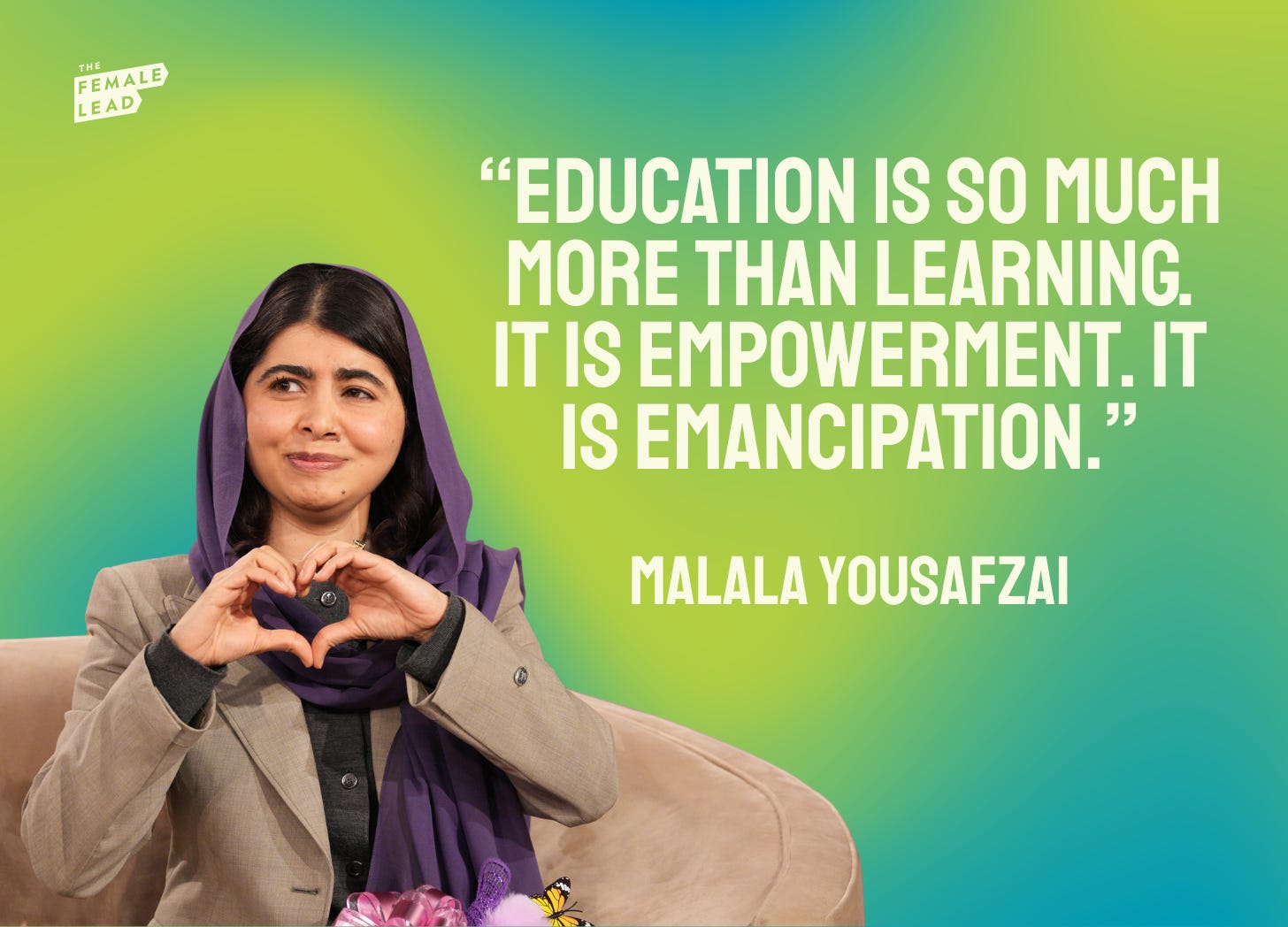
Last year, I was lucky enough to see Malala Yousafzai speak at the Southbank Centre in London about her newly released book, Finding My Way. I couldn’t quite believe that this Nobel Peace Prize winner, world-famous activist, and poster girl for women’s rights and education was just like me.
This week, I was lucky enough to watch her speak again. And actually, I think that’s exactly what she’s trying to tell us.
The first question host Pandora Sykes asked was why she felt ready to write about her life in such a vulnerable and honest way.
“When you have a public image and people can look you up on Wikipedia, there is a fixed story of you. You are changing, but that story isn’t changing. Time passes by, you grow, things happen that teach you a lot in life.”
Whilst Malala did something rare and extraordinary, the world often forgot that she was still a teenage girl.
She shares a similar misconception in her book. After becoming known worldwide for being attacked by the Taliban, the media painted her as a kind of “mythical heroine”. As she writes, people began to describe someone she didn’t recognise: “a serious and shy girl, a wallflower forced to speak out when the Taliban took away her books.”
But Malala’s reality was different.
“Growing up in Mingora, I was a troublemaker. At school, I ferried bits of gossip back and forth between groups of girls and cracked jokes that made my friends laugh and scold me in the same breath.”
It was this perception that led Malala to approach university the way she did.
“At Oxford my only goal was to make friends - I signed up for everything... rowing society, Christian society, Hindu society, cricket, baking. I chose the social life because I thought this was the only chance to meet people my age.”
“I may have heard a rumour that the Christians brought baked goods to your dorm room, and the Hindus threw the best parties,” she writes in her book.
It sounds humanly impossible to be doing this much whilst also studying PPE - widely regarded as one of Oxford’s most demanding degrees - and even Malala admits she probably went overboard at the start.
“When you are sitting with presidents and prime ministers, you are expected to be a very serious person. I wanted to be a normal student at college. I wanted to separate myself from the work that I did.”
Her excitement to embrace every aspect of university life is a reminder that, despite her status as a Nobel laureate, she was also a young woman figuring out who she was.
It was especially moving to hear her say: “When I think about the Malala who entered college and the Malala who graduated, they are two completely different people and that is the biggest success of my education.”
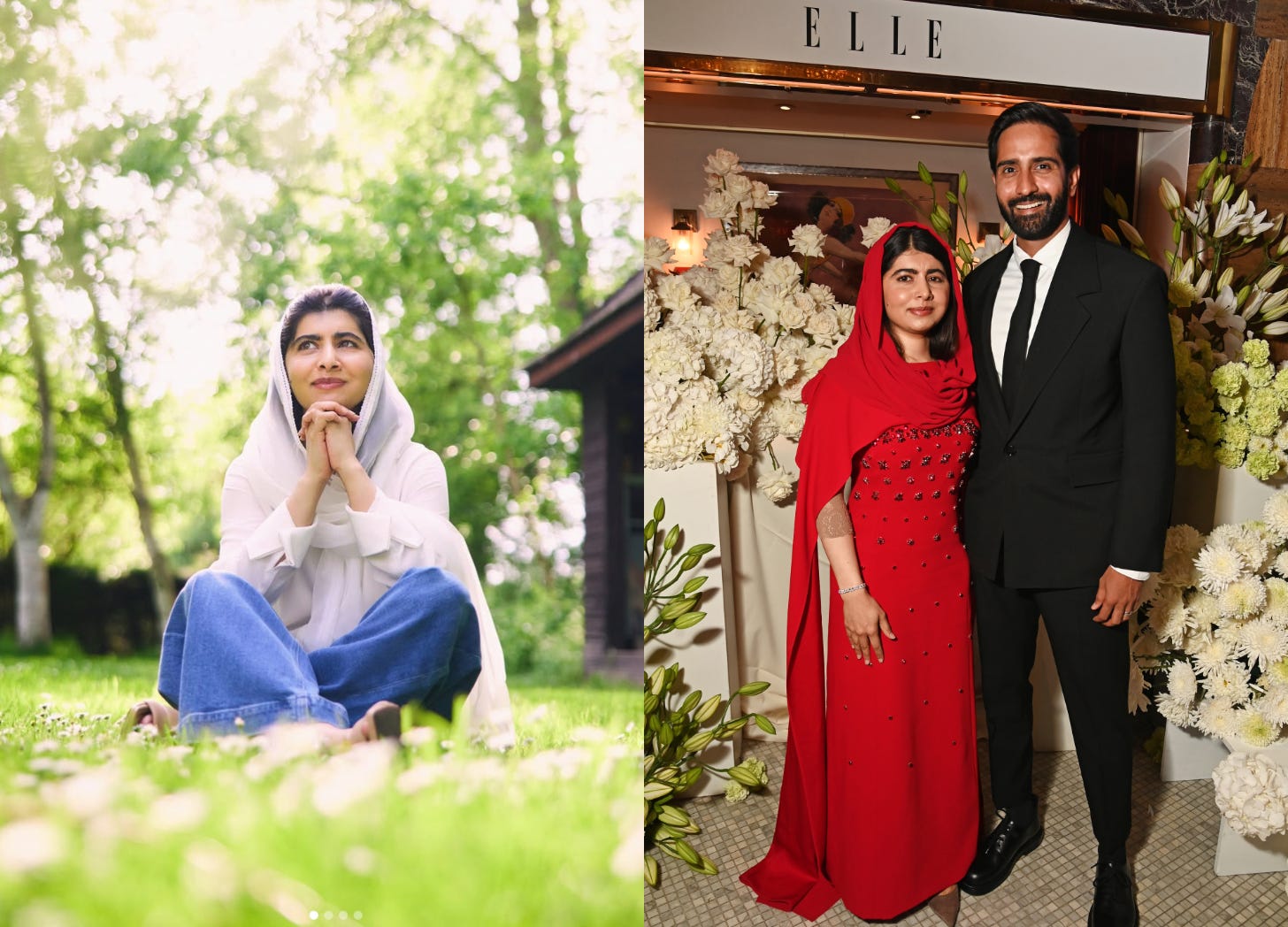
Malala married her husband, Asser Malik, in November 2021, but before that she had publicly questioned marriage altogether. The reasons behind those views really stuck with me.
“Growing up in Pakistan, I knew that protecting yourself from marriage was so important for girls because that is the only way you can have a future. Girls were married whilst they were still children. I saw it happen to friends at school. So I thought, to protect myself, I have to stay away.”
“Even as I got older, that didn’t change. I realised that often women still have to make more compromises than men.”
“I thought about all the women throughout history who took that burden on their shoulders and still do.”
Ultimately, Malala got to a point where marriage felt right.
“We were on the same page. We had respect for each other... I realised he was the right person.”
But even with that reassurance, she describes feeling as though she was “making a decision for all women.”
It’s a striking example of the pressure placed on women who become symbols. Even deeply personal choices can feel political.
Related articles


Malala has been fighting for girls’ education since the world first heard her name in 2012, so it may be less surprising to hear that her passion for the issue remains as strong as ever.
“There are so many girls who lost their opportunity to complete their education because of marriage and other reasons. It’s so hard for girls to break out and beat the cultural expectations and stereotypes. Education means they can learn about their rights, to stand up for what is right and wrong in their lives.”
Of course, she’s right. The scale of the issue remains enormous. According to the UNESCO, around 122 million girls worldwide are out of school, while millions more are at risk of dropping out because of poverty, conflict, discrimination and child marriage.
“Everyone should have access to education. It shouldn’t be a privilege, it should be a right. No one should be left behind because of their gender. I want every girl to be able to go to school and complete their education.”
“Education is so much more than learning. It is empowerment. It is emancipation.”
Watching Malala speak, I was struck by how she is both extraordinary and ordinary. She has addressed world leaders, survived an assassination attempt and become one of the most recognisable activists on the planet. Yet she also worried about making friends at university, questioned whether marriage would limit her future, and spent years figuring out who she wanted to be.
Perhaps that’s what makes her such a compelling role model. Not because she’s superhuman, but because she isn’t. Behind the activist is a woman still learning, changing and finding her way - just like the rest of us.
