
Let’s talk about misogyny
A closer look at the micro aggressions that shape how women move through the world.

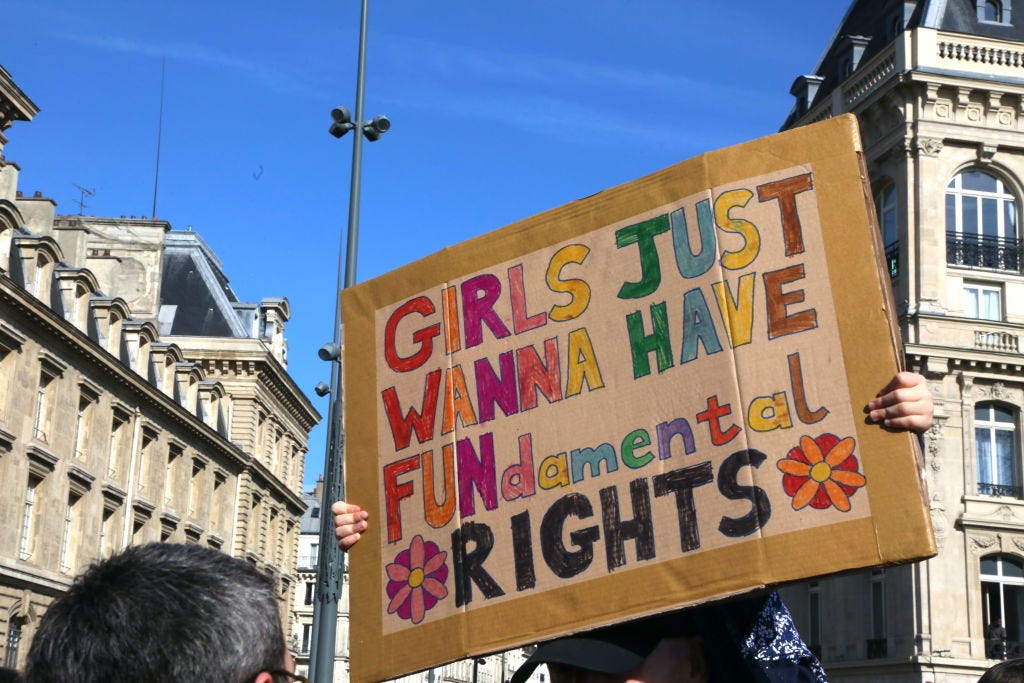
Most misogyny is not dramatic. In fact, it’s quiet, casual, and easy to miss or brush off if you’re not the person it’s aimed at. We’re talking about throwaway comments and ‘harmless’ memes on social media that go viral for all the wrong reasons.
During 16 Days of Action Against Gender-Based Violence (25 Nov–10 Dec), we want to explore the ways the roots of harm are found in our daily lives, in the attitudes and behaviours young people start absorbing long before anything escalates.
👉 This week, we’re exploring where everyday misogyny shows up, and how simple conversations can help young people make sense of it.
Hit subscribe and manage your subscription in Substack by ticking RISE to receive future issues of RISE by The Female Lead.
⚠️ Misogyny often starts small - that’s why it spreads
Here’s how it can show up in our lives:
In school: Comments about girls’ bodies or clothes being brushed off as “banter”. Nearly half of secondary school girls (49%) say they’ve been sexually harassed at school, most of it dismissed or downplayed (Ofsted, “Review of sexual abuse in schools and colleges”, 2021).
Online: Male influencers telling boys that dominance equals strength, with 1 in 3 young men in the UK aged 16–29 say they have a positive view of Andrew Tate (YouGov, 2023). Misogynistic “alpha” content on TikTok has been watched billions of times (Bloomberg analysis of TikTok trend data, 2023).
Everyday life: Girls planning their journeys home more carefully than boys, and with good reason. Girls are three times more likely to feel unsafe in public spaces than boys (Plan International UK, “State of Girls’ Rights in the UK”, 2022).
⭐ Spotlight: Millie Bobby Brown at the Stranger Things premiere
A recent moment on the Stranger Things 5 premiere red carpet said everything about how subtle, and persistent, misogyny can be.
As Millie Bobby Brown stood for photographers, one shouted the classic command so many women know too well: “Smile!”
Without missing a beat, she turned and replied: “Smile? YOU smile.” Then she walked on.
In the public eye, posing for the cameras apparently still wasn’t “enough” - Millie was expected to look pretty, look pleasant, look grateful. And that expectation lands very differently on girls and women than it does on men. Brown’s response wasn’t disrespectful - it was a boundary. A reminder that she is not there to perform a mood on command.
Resources
👉 For Teachers/Educators
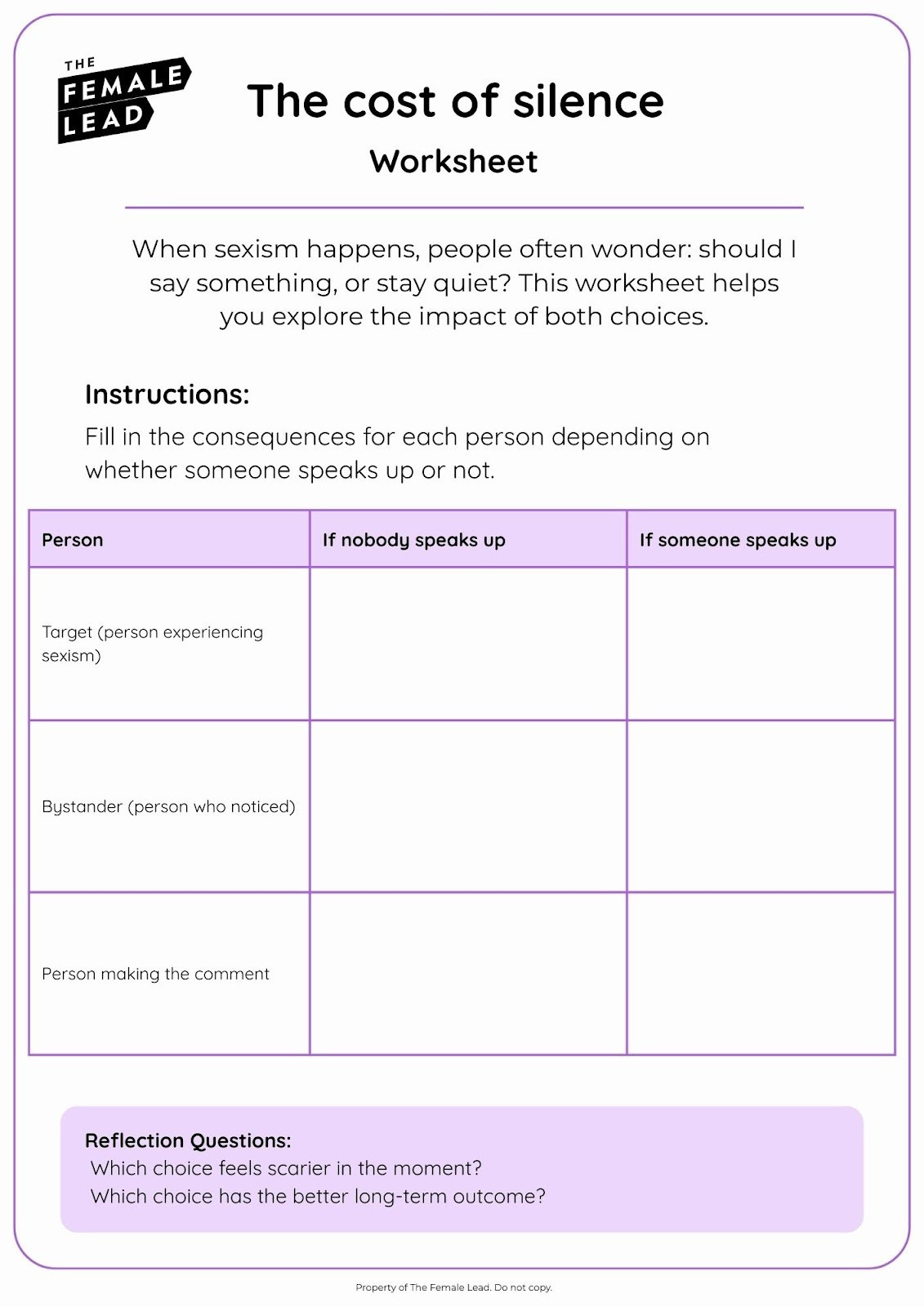
Reflection Worksheet: the cost of silence
Sometimes the hardest choice is whether to speak up or stay quiet when we witness sexism.
How to use: Use our worksheet in class to explore the consequences of speaking up vs staying silent when sexism happens and the impact on the target, bystander and perpetrator.
This activity helps young people see that silence carries its own costs and to think critically about how and when to stand up to sexism.
Teacher further reading: A framework that enables girls to achieve their full potential
We recently had the privilege of attending The House of Lords as a guest of GDST (The Girls’ Day School Trust) and Baroness Finlay where we marked the release of their new report: Designing the Future of Girls’ Education. It contains expert knowledge and tools to understand how to enable girls to achieve their full potential in a world still characterised by inequalities and personal prejudices, with our Founder, Edwina Dunn OBE as a contributor.
The insights from the report’s contributors are focused on three core principles for educating girls to realise their ambitions: Classroom, Curriculum and Culture.
👉 For Parents/Guardians
Conversation Starters: Helping Young People Spot Everyday Misogyny
Misogyny is often learned quietly through jokes, comments, and attitudes absorbed long before young people have the language to describe it. These prompts can help you open up gentle, meaningful conversations at home.
1. “Have you ever heard someone say something that made you think… that didn’t feel right?”
A simple way to help them reflect on moments of discomfort and why they matter.
2. “What do you think people mean when they say something is ‘just a joke’?”
Start exploring the difference between humour and harm, and who gets to decide.
3. “Do you think boys and girls are treated the same online? What differences have you noticed?”
Helps surface what they’re seeing on TikTok, YouTube or gaming platforms.
4. “If a friend said something sexist, what do you think you’d do?”
A way to rehearse boundaries, empathy and safe ways to respond.
5. “Have you ever felt expected to act or look a certain way because of your gender?”
Supports conversations about pressure, expectations and autonomy.
6. “When you hear someone like Millie Bobby Brown respond confidently on the red carpet, how does it make you feel?”
Brings the spotlight example into the real world, helping them link behaviour to agency and confidence.
7. “What do you think adults could do better when it comes to challenging misogyny?”
Shows them their perspective matters - and opens the door for honest, two-way conversation.
📚 Reading List: For Adults
Books to deepen understanding, spark reflection, and support conversations at home or in the classroom.
1. Invisible Women - Caroline Criado Perez
A sharp, essential look at how gender bias shapes everything from healthcare to transport. Grounding for anyone wanting to understand structural inequality.
2. Everyday Sexism - Laura Bates
A powerful collection of lived experiences from women and girls. Clear, accessible, and an excellent entry point for parents and educators.
3. Boys Will Be Boys - Clementine Ford
Explores how misogyny harms boys as well as girls and how raising boys differently can reshape culture.
4. Beyond the Gender Binary - Alok Vaid-Menon
A compassionate short read that helps adults understand how rigid gender expectations fuel misogyny and harm.
5. The Courage to Be Disliked - Ichiro Kishimi & Fumitake Koga
Not gender-specific, but brilliant for exploring boundaries, autonomy, self-worth and resisting societal pressure, all crucial in conversations about respect.
📘 Reading List: For Young People
Engaging, age-appropriate books that explore equality, respect, stereotypes and confidence.
1. Girls Can Do Anything - Caryl Hart
Perfect for younger readers. A fun, empowering challenge to gender stereotypes.
2. Fight Back - A.M. Dassu
A fantastic YA novel about a teen girl standing up to misogyny, racism and online harassment. Realistic, empowering and brilliant for discussion.
3. Feminism Is for Everybody - bell hooks
A short, clear and empowering explanation of what equality really means, ideal for teens.
4. The Power - Naomi Alderman
Best for older teens (14+). A gripping dystopia where girls become the physically dominant gender, flipping the power structure and forcing readers to question how violence, fear and control are justified. Brilliant for discussions about misogyny, fairness and equality.
5. You Don’t Own Me - Molly E. Holzschlag
A fascinating dive into how the toy industry shapes girls’ identities, great for media literacy and critical thinking.
Great post. The Power is an interesting book, I believe there is a tv series too. Women know there are micro aggressions everywhere but sadly, men don’t see them even when they are pointed out.
Excellent resources, thank you. And snaps for Millie Bobby Brown. 🫰