


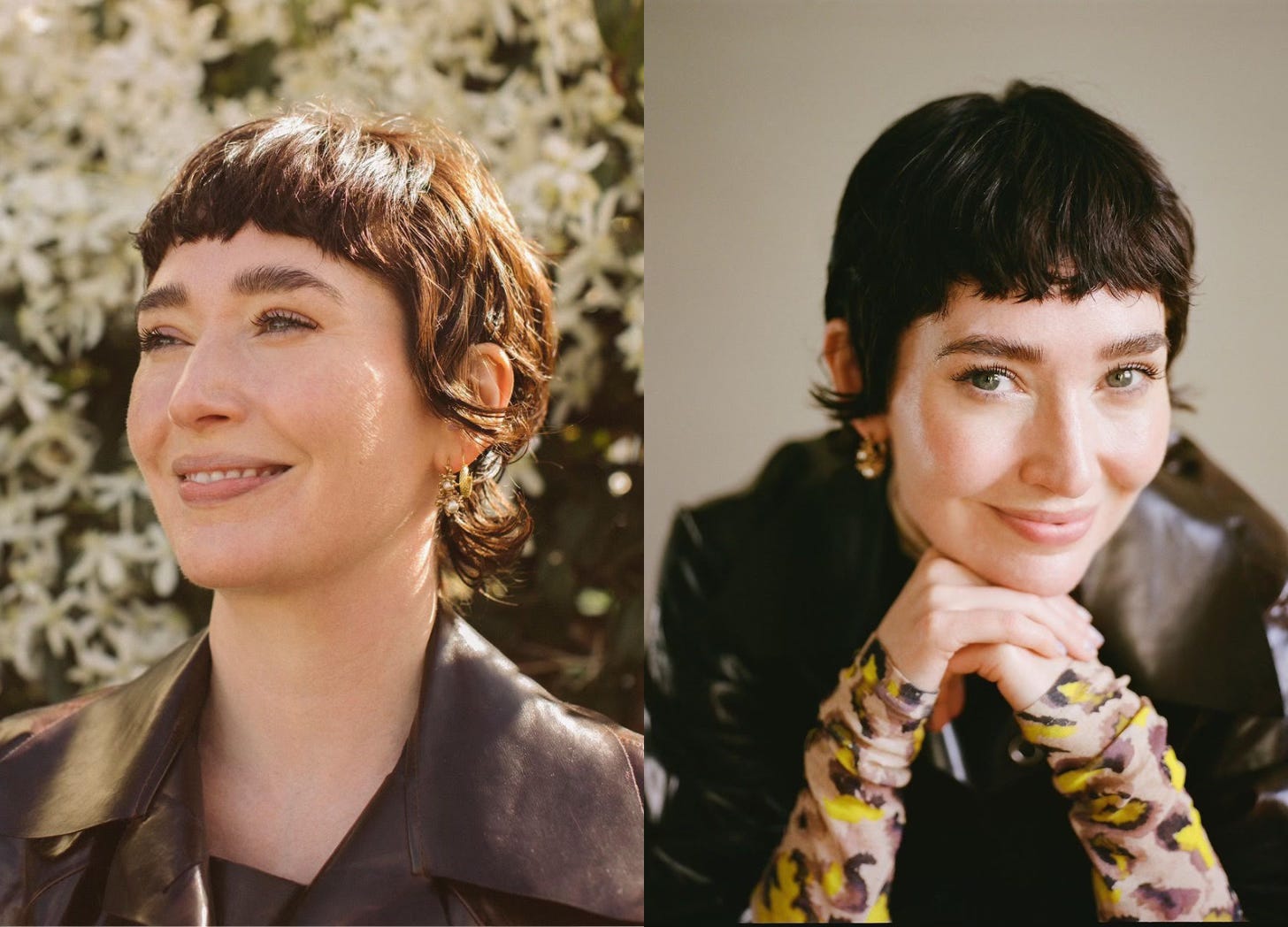
When Kathryn Ferguson’s first drama short Nostalgie (2025) was shortlisted for a BAFTA, it marked a new chapter in a career already defined by fearless storytelling, feminist conviction and emotional precision. Known for her award-winning documentary Nothing Compares, the definitive portrait of Sinéad O’Connor which premiered at Sundance Film Festival 2022, Kathryn’s move into drama feels less like a pivot and more like an expansion to answer the same questions: who controls stories, whose voices are amplified, and what happens when women refuse to be quiet?
“I’m always putting women front and centre,” Kathryn tells The Female Lead without hesitation. “That’s been the through-line of my work for the last 15 years.”
Irish women, rage and revisionist history
Kathryn grew up in Northern Ireland during The Troubles and came of age in an Ireland where women were, in her words, “second-class citizens”. The weight of church and state in the south, the absence of bodily autonomy on both sides of the border, and a culture steeped in shame left a mark.
“I was aware of gender injustice from a very young age,” she says. “And I think Irish women are furious. But honestly, women everywhere are furious.”
That rage, she believes, is not only justified but necessary. She points to the repeal of the Eighth Amendment in Ireland in 2018 overturning a near-total ban on abortion as proof of what happens when anger is shared and mobilised. “Once that genie was out of the bottle, it couldn’t be put back.”
Reclaimed narratives run through all her work. Nothing Compares reframed Sinéad O’Connor not as a ‘difficult’ woman, but as a visionary artist punished for telling the truth too early.
“What happened to Sinéad is happening to women everywhere now,” Ferguson says. “Silencing. Erasure. On a mass scale.”
From documentary truth to dramatic fiction
BAFTA-nominated Nostalgie is Kathryn’s first drama project, adapted from a short story by Belfast writer Wendy Erskine. Set in contemporary Belfast, it centres on an ‘80s pop star who licences his music without interrogating where, or by whom, it will be used.
“On a purely cinematic level, I could just see it,” Kathryn says. “It was so self-contained and visual. But once I sat with it, I realised the themes were exactly where my head already was.”
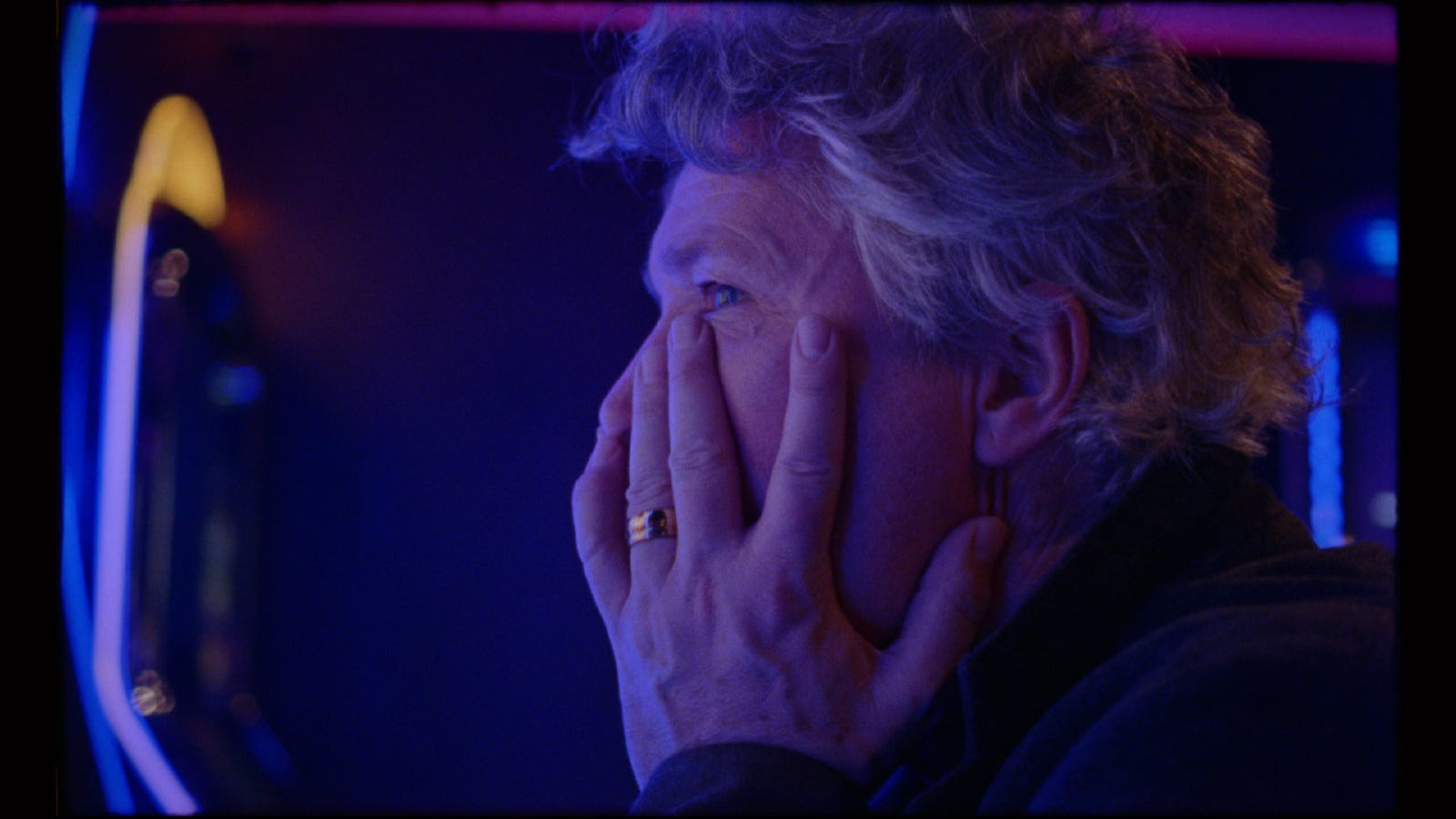
That headspace was shaped by years immersed in Sinéad O’Connor’s life and legacy. Working so closely with an artist who fiercely protected her work made Kathryn acutely aware of what it means to release art into the world and lose control over it.
“What happens to your work once it’s out there?” she asks. “Once your ‘babies’ go off into the ether, you can’t control how they’re used.”
In Nostalgie, that question plays out against the backdrop of modern Belfast. “There’s this idea that post-conflict cities become cultural destinations,” Kathryn says. “But there’s so much unresolved pain still in the air.”
No film school, no shortcuts
Kathryn’s career path was anything but conventional. She didn’t attend film school, instead studying at Central Saint Martins and the Royal College of Art in London, imagining her future as a writer, war photographer or even a gardener. Film arrived almost accidentally.
Her graduation project included a short film that drew more attention than the magazine she’d spent months producing. “That was the first signal,” Kathryn says. “But I had no idea how to move forward.”
She made work independently, often without budgets, while juggling teaching, lecturing and commercial projects to pay the bills. An early commission by Dazed & Confused magazine with Lady Gaga before global superstardom opened doors, but still didn’t guarantee stability.
Later, a residency at Selfridges making documentaries, music videos and short films proved seismic. “They trusted me,” Kathryn says. “An all-female team just saying: here’s the money, go and explore. That’s where I really learned how to say what I wanted to say.”
Trusting your intuition
If there’s one piece of advice Kathryn has for young women interested in film making it’s this: make your own work.
“No budgets. No commissioners. Just make the thing you want to make,” she says. “The work that cuts through is the work that’s authentic, not the work you think people want to see.”
Kathryn’s candid about the reality of rejection. “There have been so many knocks. There still are.”
Now in her forties, with a six-year-old son and over thirty award nominations internationally, including Emmy, Critics Choice, IDA, and PGA Awards, Kathryn’s also learned the importance of boundaries.
“I work hard in my working hours and then I close the door,” she says. “I didn’t protect my nervous system for a long time. Now I know I have to.”
Women in film
Despite high-profile conversations about equality, Kathryn’s clear about the state of the industry.
“It’s much harder to get films funded if you’re a woman. It’s much harder to be listened to,” she says. “And what’s terrifying is that we’ve gone backwards.”
Recent figures show a sharp drop in women directing major films, a regression she sees as part of a wider patriarchal backlash. “Why would the film industry be any different from the world we’re living in?”
In response, Kathryn’s helping to build community, recently co-founding a peer group of independent UK directors to share experiences, rescources and support. “We’re so siloed. We need to talk, honestly, about what this industry is like.”
And women are at the heart of her future projects too. Kathryn is now developing Matrescence, a feature documentary based on Lucy Jones’ incendiary book about the neurological and political reality of motherhood. Combining hard science with lived experience, the project aims to make the invisible undeniable.
“We’re filming with neuroscientists who can literally show how the female brain changes during motherhood,” Kathryn says. “This isn’t opinion. This is fact.”
There’s also another feature drama in development, again centred on women. Kathryn believes art rooted in integrity, anger and empathy still matters.
“Keep putting women’s stories into the world,” Kathryn says. “Keep raising the vibration. That’s what we do.”
And right now, it feels like exactly what we need.
