
"I help women fight back against abuse"
Triumph Over Trauma: A Conversation with Former Team GB boxer, European gold medallist, and founder of Fight Forward CIC, Lesley Sackey.

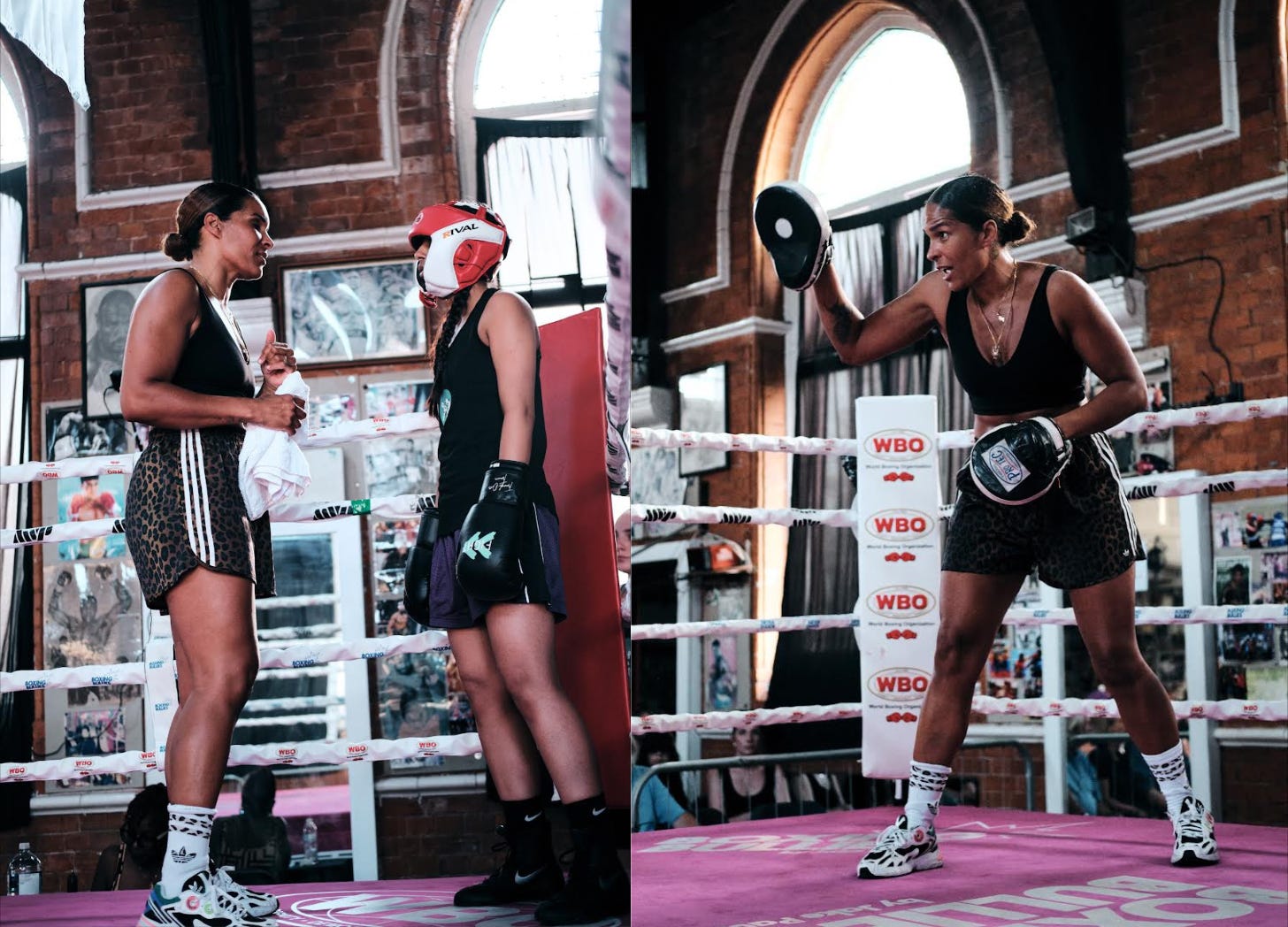
You’ve lived several distinct lives — gold medal-winning boxer, entrepreneur, and now founder of Fight Forward CIC. Looking back, what thread connects all of those chapters?
Freedom and ownership.
Ownership over your body, your voice — that creates freedom and self-trust. And that ultimately feeds into a greater sense of freedom, because you feel empowered. Choice feels accessible to you. Freedom creates the reality that you can literally do or be anything, which allows for constant reinvention, evolution, adventure.
Fight Forward allows me to create the safe container for women to explore these themes for themselves, and access healing on their own terms.
Boxing taught you how to fight physically. What has life taught you about fighting emotionally?
For every experience outside the ring, I can always find a lesson or an experience inside it that applies.
What life has taught me emotionally is this: if you don’t move, you don’t stay alive. And by that I mean, in order to move past a state of survival, we have to move — physically, emotionally, spiritually. We have to grow, learn, evolve. Otherwise we’re stuck. Stagnant. And we die, in whatever sense of that word applies to where you’re stuck.
That emotional fight to stay moving can be the hardest one there is.
Was there a defining moment when you realised your next mission was helping women recover from abuse?
Like most things in my life, I feel things have chosen me and I’ve just followed the path.
When I chose to have one last fight after a ten-year hiatus — to reclaim myself after what had happened — that experience was so transformative I felt compelled to share the process with other women in my situation. Or at the very least, use the power of storytelling to show them what’s possible.
Many people associate strength with toughness. Has your definition of strength changed over the years?
It’s not for me to tell anyone what real strength is. I can only share what I’ve found.
I used to think it meant absorbing damage and not flinching. What I’ve actually found is something closer to self-trust — the innate knowing that whatever the challenge, you’ll find a way through it.
The ability to ask for help is actually the bravest and strongest thing you can do — particularly if you’re used to doing it all yourself. There is great strength in being vulnerable.
You speak often about reclaiming your voice. Have there been moments when you felt you had lost your own?
There’s a particular silence that comes with abuse. You stop sharing with the people close to you — protective of your circumstances, of judgment, of being told what you already innately know. Silence, at times, because you have no fight left. Or you just don’t see the point, because if you respond it only creates more chaos.
I didn’t feel like I had lost my voice, as such. Rather the ability to project it. I had run out of energy. That’s why stepping back into the ring, and storytelling using my voice, was such an important part of the journey.
The phrase “fight forward” is incredibly powerful because it isn’t about simply surviving. What does “fighting forward” mean to you?
I was in such a state of survival. I wanted to thrive.
Surviving is the finish line other people expect you to be grateful for. Fighting forward is refusing to stop there — refusing to be defined and desolated by what happened to you, emotionally and societally, when you know you’re capable of so much more than getting through the day.
There is life after abuse. There is joy after abuse. There is purpose after abuse. Fighting forward is going and getting it.
What do people misunderstand most about the experience of leaving an abusive relationship?
That leaving is the end of it.
Leaving is often the most dangerous time. And what follows isn’t relief — it’s fear, uncertainty, financial concerns, housing, practical logistics, years of emotional conditioning to unlearn. In hindsight, the leaving is what created a kind of tsunami of chaos over the years that followed. I recently learned the term post-separation abuse. When I heard it for the first time, I felt so seen.
Leaving wasn’t easy. Navigating what came after was also tough.
Why do so many women struggle to recognise abuse while they are living through it?
Because I think society has done a really good job of creating stereotypical perceptions of what women who experience abuse present as and what types of abuse are so many women dont see themselves in those projections. The truth is that it is super complex and women form all backgrounds are exposed.
What does recovery actually look like in practice? Is there a moment when someone knows they’ve truly reclaimed themselves?
Nobody really talks about recovery.
Nobody talks about rebuilding confidence once it’s been systematically eroded. Nobody talks about navigating housing, finances, employment, parenting and healing all at once. Nobody talks about the loneliness that comes after the crisis has passed and the world expects you to simply move on.
I usually see women are well on their way to healing when they start to ask how they can support other women, or pay it forward. That’s testament to how amazing we are — that once we feel resourced, we’re ready to contribute to another woman’s upleveling and wellbeing.
In your work, what have you learned about shame and its role in keeping women trapped?
Shame is the voice that continues to live in your head, and lets you know at any given moment why you should feel bad.
What we do is try to expose that voice. Minimise it. Confront it in the ring and treat it as an opponent that needs to be beaten.
What are some of the earliest signs that a woman is beginning to rebuild her confidence?
Eye contact. Literally standing taller. Smiling! The first time she disagrees with someone in the group. Laughs properly instead of the polite version. Crying, hugging. Small things that are not actually small.
You’ve said your ambition is to help 100,000 women fight forward out of abuse. Why is scale so important to you?
I actually love a challenge. I’ve been the underdog many times, and I love the opportunity to build and do things people doubt, or don’t think is possible. I also know this is a global problem.
I built something that works for one cohort at a time. If I stop there, I’ve built a good local service. I didn’t survive what I survived to build something small, thats where my athlete mindset really serves me.
Founders often talk about solving problems. You’re tackling a deeply human and systemic issue. How do you carry the emotional weight of that responsibility?
It can be intense for sure.
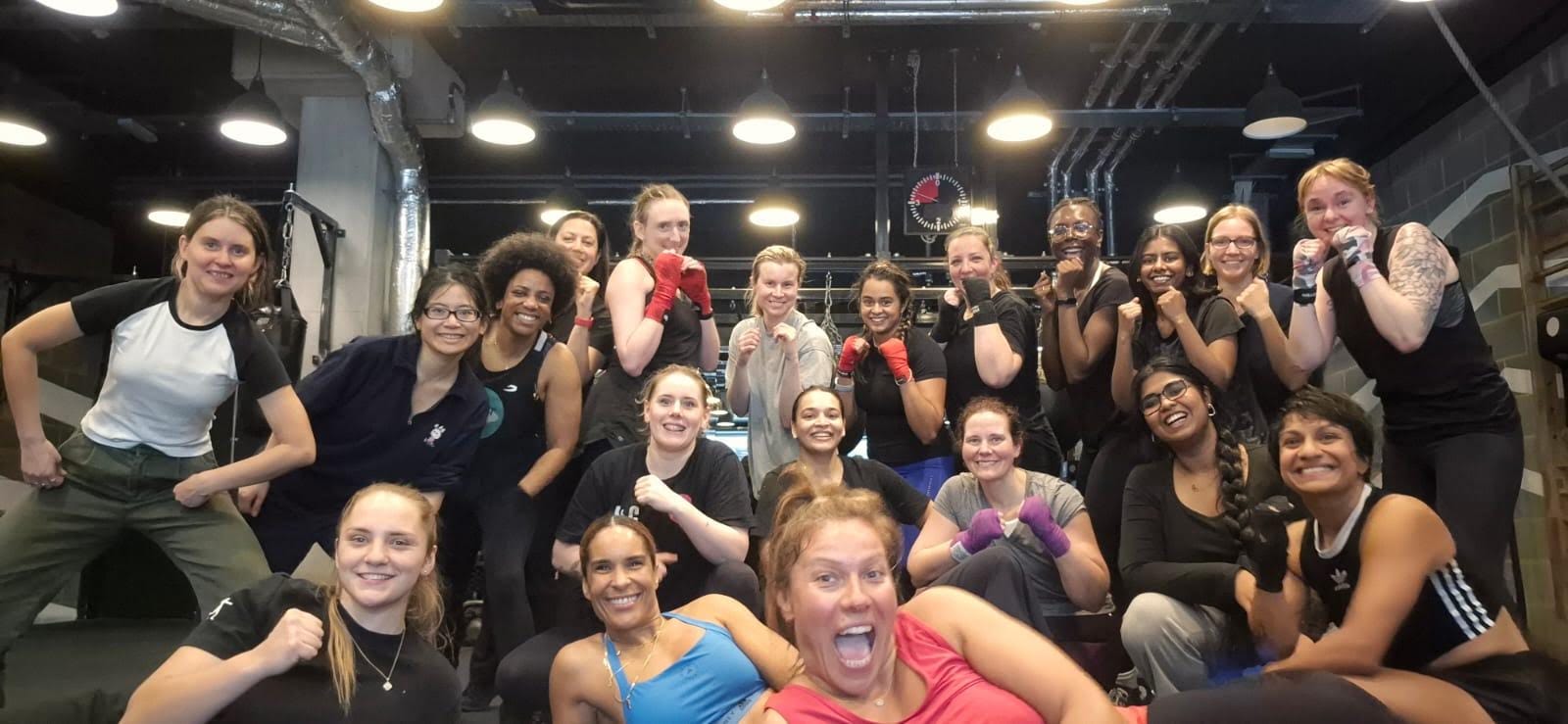
I hear things in that gym that stay with me. I’ve had to learn to actually process it rather than push through it, or I end up carrying every woman’s story on top of my own. My job isn’t to fix it for them. It’s to hold the space steady while they do it themselves. Create boundaries and still give to my own healing journey because its ongoing.
Has being an athlete shaped the way you lead an organisation?
Yes. Boxing gave me the ability to adapt, pivot and respond with confidence, whatever the outcome.
For years I worked in corporate spaces helping other women adopt a champion’s mindset, while feeling completely disempowered myself. That contradiction taught me something sport alone couldn’t. You can look strong and be depleted at the same time. Nobody can tell from the outside.
What’s the hardest lesson you’ve learned about building a mission-driven venture?
That conviction isn’t evidence. I know boxing changes lives — I’m the proof. Funders and policymakers don’t move on that. They move on data.
Being as disciplined about the evidence as I am about the mission has been the harder lesson. And the one that actually gets us to scale.
Have there been moments when you’ve doubted whether this mission could become as big as you hope? What keeps you going?
Regularly. Solo founder, no paid staff, pro-bono coaches.
What keeps me going is simple. I know what this did for me. I was in a state of survival, and I wanted to thrive — and I did. I’m not guessing whether this works. IThese women who have participated are living proof. The only question left is whether enough women get access to it.
What kind of support do women need from institutions, employers, and communities that they’re not currently getting?
Belief before proof. Right now women often have to justify the severity of what happened to them before anyone will help.
Domestic abuse doesn’t stay at home. It shows up in workplaces through absenteeism, presenteeism, reduced confidence — and most survivors spend enormous energy just trying to appear okay. Employers need real policy, not a line on an EAP nobody uses. Sometimes the most powerful thing anyone can say is Its Ok. I see you.
If you had the ear of every policymaker for five minutes, what would you ask them to do differently?
Fund the recovery, not just the crisis. Powering women to thrive benefits us all!
Too often support ends when a woman reaches safety. But safety is only the beginning. Recovery needs housing, employment, financial independence, wellbeing support, legal guidance, community — funded properly, for as long as it actually takes.
Women are often told they need to be resilient. Is there a danger in celebrating resilience without addressing the conditions that require it?
The word resilience can do us a disservice as women. It’s often used to signal that we should take as much as possible and not break.
But actually, resilience is self-trust. It’s not what you can absorb. It’s whether you know, underneath it, that you’ll find your way through.
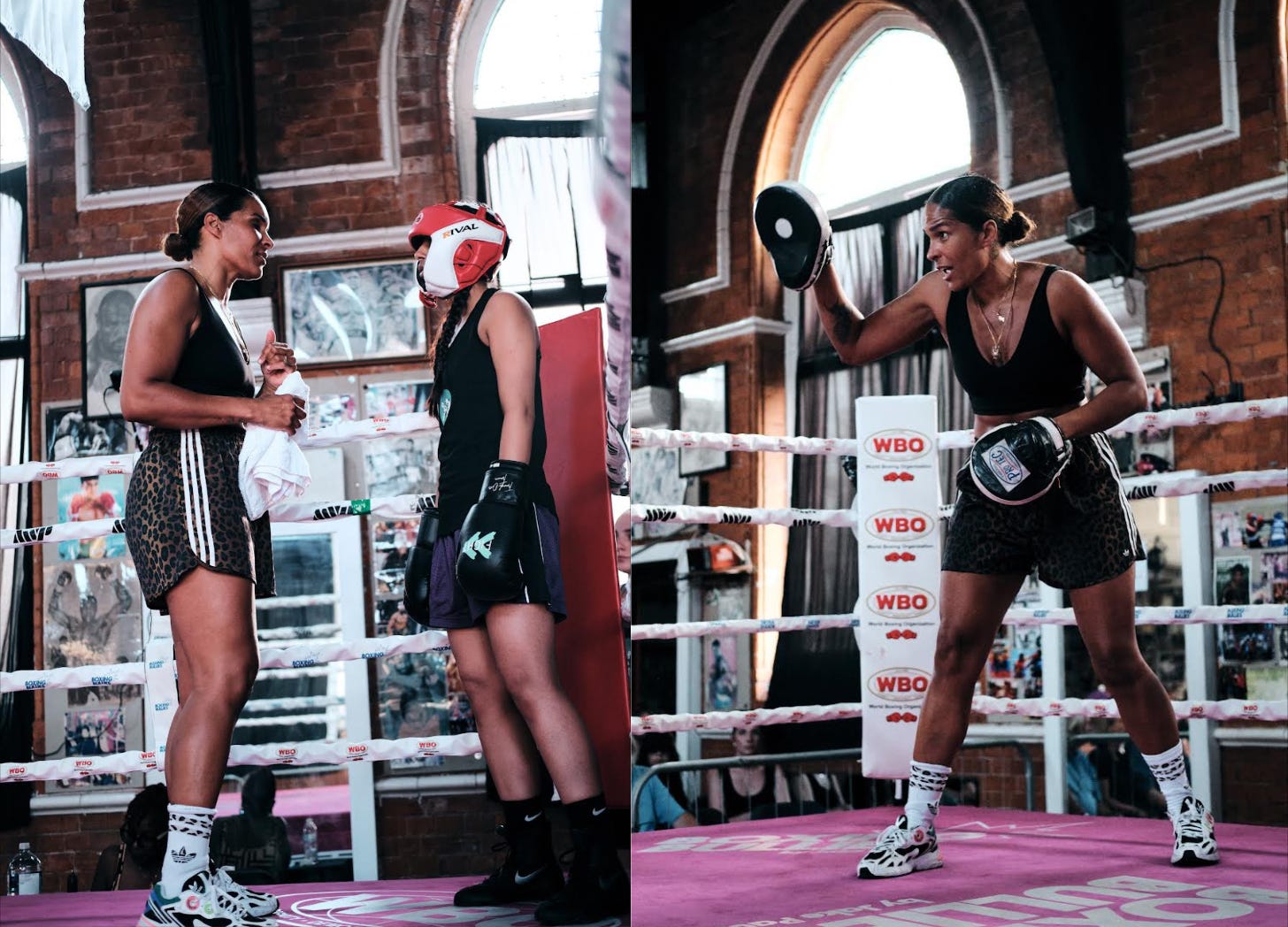
How do we help women move from survival mode to a place where they can dream and be ambitious again?
You can’t dream on an empty tank. Survival uses everything you have just to get through the day.
One of the tools I use is what I call the 3 R’s. Resources — stocking an emotional backpack before you need it, not skills, self. Reference — a running record of what you’ve already overcome, proof you can point back to. Recovery — building in the pause, because skipping it means you don’t last, in the ring or out of it.
What role does financial independence play in helping women escape abuse?
Often it’s the difference between leaving and staying. Financial control is one of the most common, least discussed tools of abuse.
It doesn’t just fund an exit. It funds the belief that an exit is even possible.
And lets be honest financial security creates an enormous amount of freedom for women.
What have the women you’ve supported taught you about courage?
That we are abundant! Courage is in our DNA and there are so many ways in which we access it. Its not always the big things that remind us of that.
As someone who has spent your life in traditionally male-dominated spaces, what advice would you give to women who feel they have to make themselves smaller to succeed?
Don’t give up - it’s cliche but there is always a way and find others to help yuo as nothing can be done in isolation.
Imagine Fight Forward reaches its goal and supports 100,000 women. What changes do you hope we’ll see in society as a result?
A world where no woman has to navigate recovery alone.
A world where surviving is not the finish line. Where every woman has the opportunity to thrive. Because every woman deserves more than survival.
What would success look like beyond the numbers?
Success would look like a globally adopted, non-clinical intervention programme, available at scale, delivered to women referred by local councils, GPs — validated by research we will have conducted around the efficacy of boxing as a valuable tool to help women post-crisis.
What is the conversation around domestic abuse that you hope we’ll be having ten years from now?
I hope we stop asking “why didn’t she leave” and start asking what we failed to give her that would have made leaving possible and how can we power her to thrive?
I also hope recovery gets talked about as much as the crisis does. Right now, almost nothing is funded for what happens after.
And finally, when people tell your story one day, what do you hope they say you fought for?
For women, and their sense of freedom and ownership — whether they’ve experienced trauma or not.
Who is the woman — famous or not — who most changed the course of your life, and what did she teach you about strength?
Kiran Gandhi, also known as Madame Gandhi, is one of the greatest examples I know of a woman living fully in her freedom and power. She famously went viral for free-bleeding while running the London Marathon to challenge period stigma, but what inspires me most isn’t one moment—it’s the way she consistently lives her values.
She is an activist, an incredible speaker, and someone who doesn’t just talk about courage, compassion and justice—she practises them every single day. Being around her has challenged me to grow and has shown me what it truly means to live with integrity.
She also happens to be my partner. I genuinely believe that if you’re going to share your life with someone, they should inspire you and earn your deepest respect. Otherwise, what’s the point? Through our relationship, she has shown me what a healthy partnership rooted in love, trust, honesty and mutual support really looks like. That experience has been just as transformational for me as any professional achievement.
