
6 good news stories for women you might have missed
It's not all doom and gloom. Here's some big wins for women that didn’t make the outrage cycle

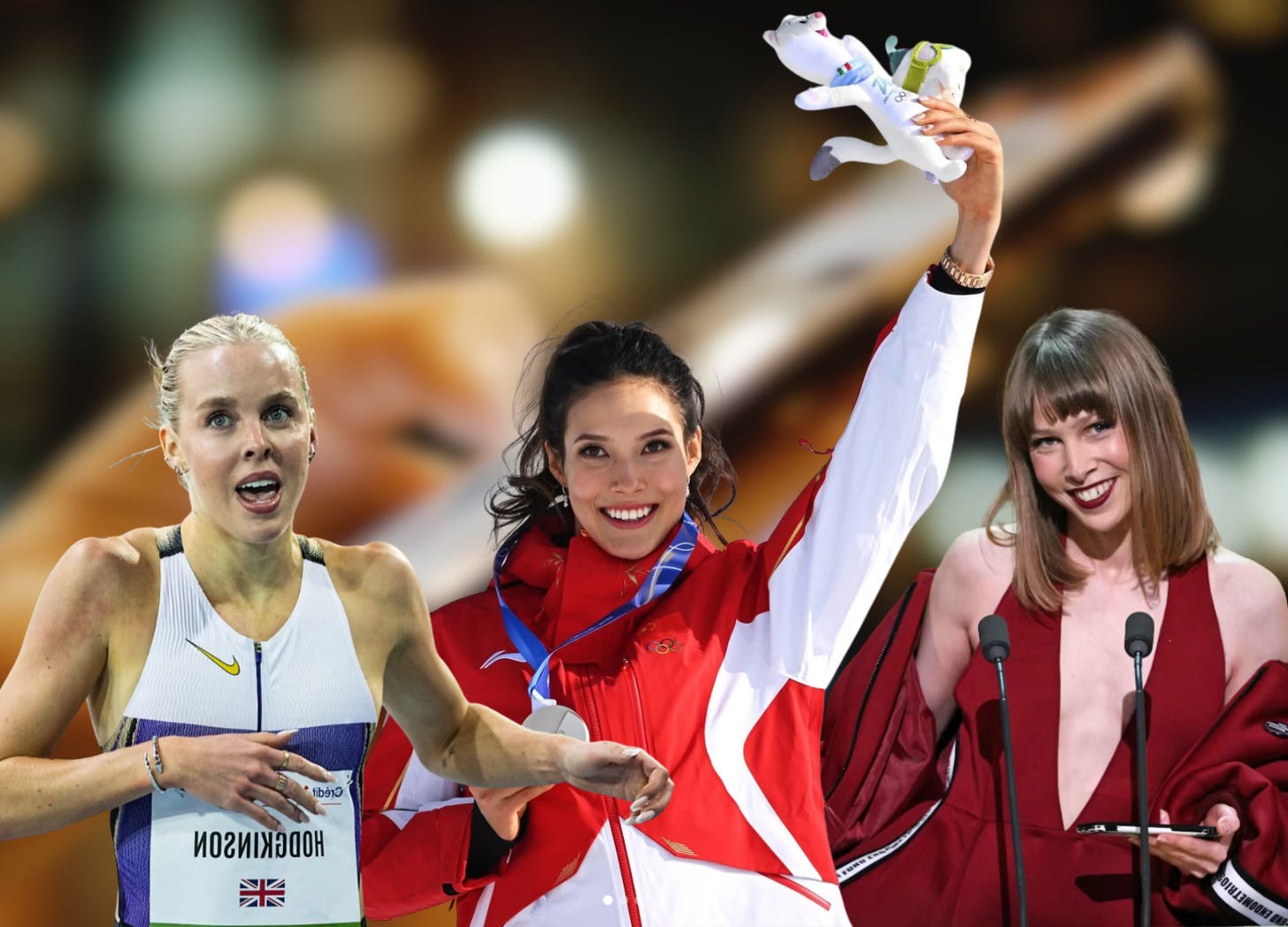
There is no shortage of reasons to feel exhausted by the news cycle. It can be hard enough being a woman without also scrolling through a daily buffet of rights rolled back, voices shouted down and yet another tech bro insisting that artificial intelligence will definitely fix everything - 🙄. But for all the noise, the backlash and the endless think pieces, the fuller picture is more complicated than the doom suggests.
Brilliant things are happening for - and by - women. They are happening in stadiums and laboratories, in film studios and clinics, in policy meetings and on running tracks. They are happening structurally and symbolically. So once a month, we are making space for them.
Here is some good news for women from the past month.
Deepfake abuse faces 48-hour takedown rule
UK ministers introduced measures requiring platforms to remove non-consensual intimate images within 48 hours of a report. That includes deepfakes, digitally altered images that disproportionately target women, often using their faces without consent to create sexually explicit content.
The speed requirement is significant. The longer an image circulates, the greater the harm - socially, professionally and psychologically. A 48-hour rule acknowledges that tech-enabled abuse is not a niche issue but a mainstream one. It also shifts responsibility back where it belongs: onto the platforms that profit from hosting user content. Regulation alone will not solve image-based abuse, but this move suggests a growing recognition that women should not have to police the internet alone.
The Female Lead sat down with UK Prime Minister Sir Keir Starmer to discuss how this will protect victims moving forward.
Most gender-balanced Winter Olympic Games yet
At Milano Cortina, women made up 47 percent of competitors - the highest share in Winter Olympics history. It is not perfect parity. Men still had more medal events overall, and structural inequalities in funding and coverage do not disappear because of one statistic. But 47 percent is not an accident. It reflects decades of campaigning, incremental reform and pressure on governing bodies to take equity seriously.
The representation and visibility matters. When young girls see women occupying nearly half the field at one of the world’s most watched sporting events, it subtly recalibrates what feels normal. Progress in sport is often uneven and slow, but this shift signals something important: women’s participation is no longer a side note to the main event. It is the main event.
Endometriosis film wins BAFTA
This Is Endometriosis won the British Short Film award at the BAFTA Film Awards, bringing mainstream attention to a condition estimated to affect 1 in 10 women. For many, endometriosis is accompanied not just by pain but by dismissal - years of being told that symptoms are normal, exaggerated or simply part of being female.
Collecting the award, British creative Georgie Wileman - a filmmaker, photographer and spoken-word poet - used the moment to speak directly to that culture of disbelief. “If your families, partners, friends, employers, and most messed up of all your doctors tell you that you’re lying. That you’re being dramatic, looking for attention, or just have a low pain tolerance? I’ve got a new response for you. Watch the BAFTA winning film This Is Endometriosis,” she said.
Georgie continued: “This affects 1 in 10 born with the uterus, takes on average ten years to diagnose and causes pain worse than child labour. Everyone in this room will likely know someone with endometriosis, whether they have their diagnosis yet or not. Our film focuses on validation, representation, and education of endometriosis, and we need all of you for that last part.”
India expands menopause healthcare access
In Maharashtra, India, newly launched public menopause clinics have already seen tens of thousands of visitors, establishing the first state-run network of its kind in the country. Menopause, like menstruation, has long been treated as something to be endured silently rather than supported structurally.
A state-backed network reframes menopause as a legitimate healthcare priority rather than a private inconvenience. For women navigating symptoms that can affect everything from sleep to employment, accessible public clinics are essential and practical. It’s a step closer to better advice, cheaper treatment and acknowledgement without embarrassment.
Research explores menstrual HPV testing
A February study reported that HPV detection using menstrual blood showed comparable accuracy to clinician-collected samples in identifying high-risk cervical changes. For many women, cervical screening is uncomfortable, logistically difficult or anxiety-inducing. Barriers to testing directly affect early detection rates.
The possibility of reliable menstrual blood testing could transform access. It suggests a future where screening fits more seamlessly into women’s lives rather than requiring additional appointments, time off work or invasive procedures. Research like this is often incremental, but its implications are expansive.
It’s encouraging to see healthcare adapting to women’s realities instead of expecting women to adapt to healthcare.
Keely Hodgkinson breaks the 800m record
Keely Hodgkinson ran 1:54.87 in the 800m in Liévin on 19 February, breaking a 24-year-old indoor world record. At 22, she became the fastest woman in history over the distance indoors, surpassing a mark that had stood since 2002.
The time places her at the top of the all-time indoor rankings and underlines the English runner’s status as one of the leading middle-distance athletes in the world. It is a clear statistical milestone in women’s athletics and one of the standout sporting performances of the year so far.
Taken together, these stories are not about perfection. But each of these moments marks measurable movement - in policy, in culture, in science and in sport.
If you have more good news stories about women - from your community, your industry or anywhere in the world - share them with us. We might even include them in next month’s good news! Because while the headlines may amplify the worst, we are equally committed to documenting the better.
